Skip to content
Water, fire, storm and mold calls answered 24/7 across Miami-Dade and Broward(786) 664-2643
New KingstonWater & Restoration · Miami(786) 664-2643Answered 24/7
Standing water, removed

Emergency water extraction in Miami

When there is water standing on your floor right now, every hour it sits there it is soaking into baseboards, door jambs and the bottom of the drywall, so getting it out comes before anything else.

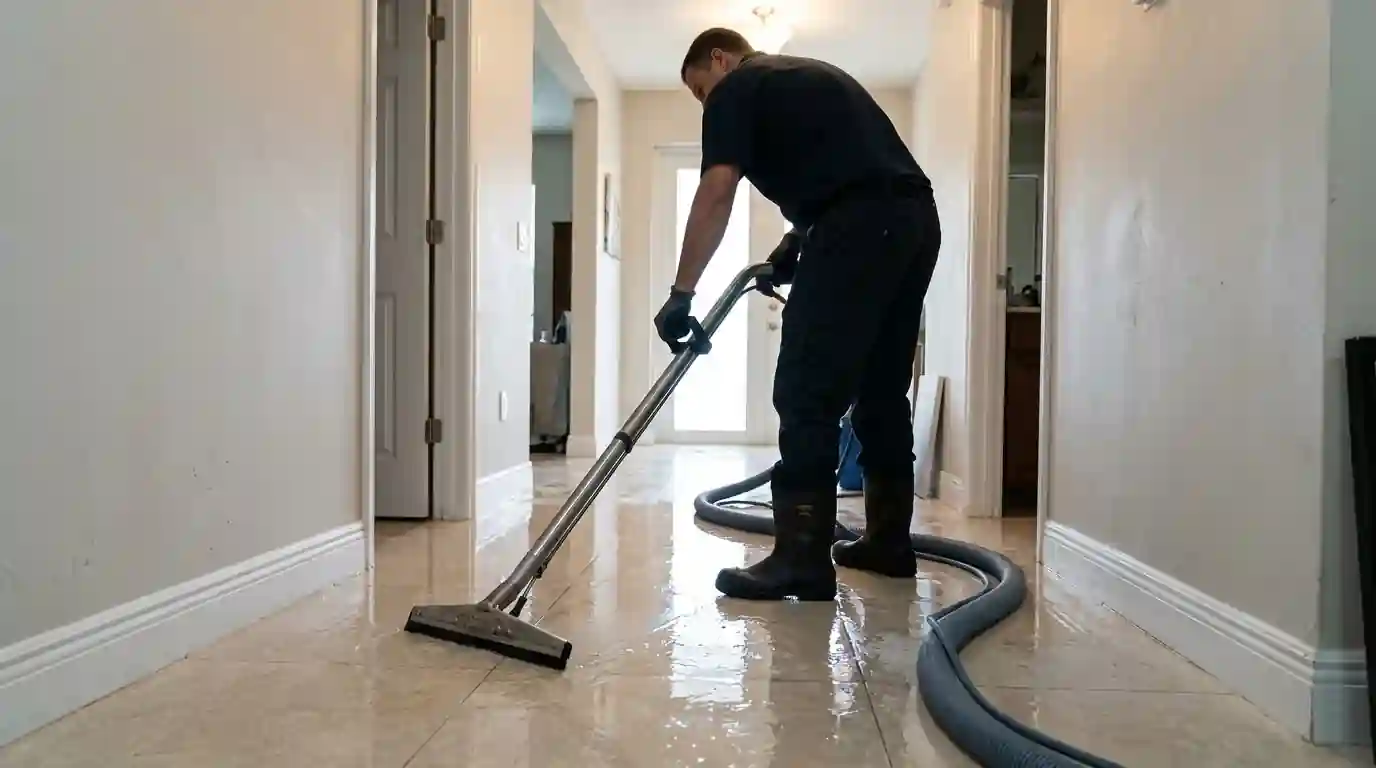
Technician using a squeegee extraction wand to pull standing water off porcelain tile in a Miami single-story home hallway
Quick answer

Emergency water extraction uses powerful pumps and wands to remove standing water before it soaks deeper into walls and cabinets. Shut off the water, cut power to wet rooms if you can reach the panel safely, and keep people and pets off the wet floor. Extraction comes first, then drying equipment goes in to deal with what the floor and walls absorbed.

Extraction is the stage that removes liquid water, as opposed to drying, which removes the moisture left behind in walls and floors. A strong extraction pass pulls out more water in an hour than dehumidifiers can in days, which is why the order matters so much.

New Kingston crews are on call 24/7 with truck-mounted and portable units, so a pipe that lets go at 2 AM gets the same response as one at noon. Stay on the phone with the dispatcher, and you will be talked through what to do until the van pulls up.
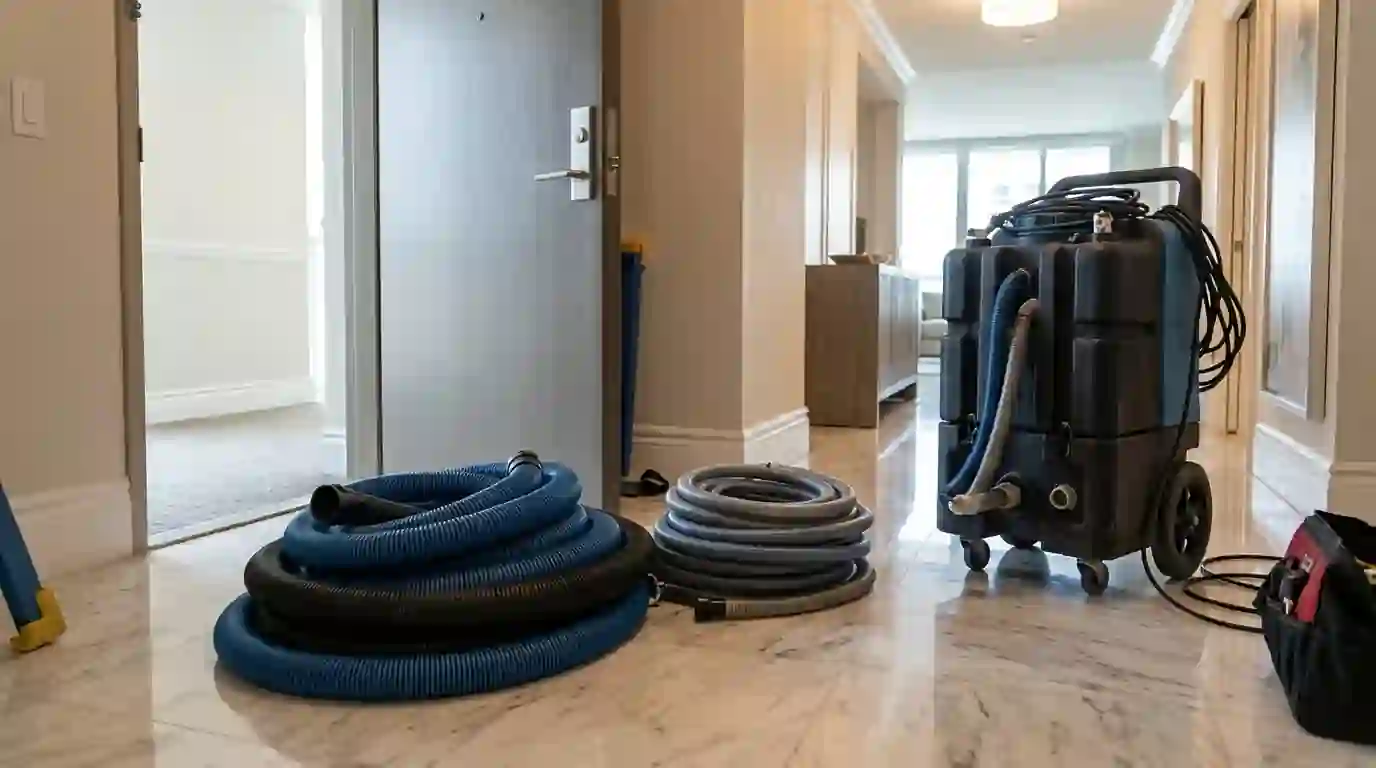
Portable water extractor and coiled hoses staged inside a high-rise condo doorway on a polished marble floor

The first hour before the truck arrives

Find the shutoff. For a toilet, sink or appliance, the valve is usually behind or under it. For anything bigger, the main valve is often near the street side of the house or where the line enters the garage. Closing it stops the volume from growing.

Then think about power. If water is near outlets and you can reach the breaker panel without standing in water, switch off the circuits for the wet rooms. If you cannot reach it safely, stay out and wait for the crew.

  • Lift rugs, electronics and papers off the floor
  • Slide foil or plastic under furniture legs so they do not stain carpet or swell
  • Take photos and short videos of the water before anything is moved
  • Leave the AC running, but do not count on it to dry the house

Truck mounts, portables and what each one does

A truck-mounted extractor stays outside and runs a hose into the house. It has the most suction and handles large volumes, so it is the tool for a whole floor of water or soaked carpet across several rooms.

In a high-rise condo, whether on Brickell Key or in Sunny Isles, a truck mount usually cannot reach the unit, so crews bring portable extractors up the service elevator. They are smaller but still pull far more than any shop vac, and they fit through hallways without blocking neighbors.

Weighted extraction tools that a technician stands on press water out of carpet and pad. Squeegee wands handle tile and stone, which covers most Miami floors.

Signs to act on

When to call about emergency water extraction

  • Water pooling at the baseboardsA sheet of water along the wall base means it has already started wicking into drywall and trim.
  • Ripples when you walkIf footsteps leave ripples, there is enough water on the slab to spread into neighboring rooms.
  • Water flowing under doorsWater crossing a threshold is moving toward bedrooms, closets and anything stored on the floor.
  • Soaked bedroom carpetCarpet and pad hold far more water than they appear to and need deep extraction, not towels.
  • Water near outlets or cordsStanding water around outlets, power strips or appliances is a safety problem before it is a cleanup problem.
  • A shop vac that cannot keep upIf you have emptied the wet vac several times and the floor still shines, the volume is past what home tools handle.

Tile on slab: where the hidden water goes

On a slab home, water does not drain away; it spreads. It finds grout lines, the gap under baseboards and the space behind cabinet toe kicks, then sits on the concrete.

That is why extraction does not stop at the visible puddle. The crew checks the next room over, the closets and under the kitchen cabinets with meters, because water can travel several feet under tile and trim without showing on top.

Once the standing water is out, structural drying handles what the slab and walls absorbed, and hidden moisture detection confirms no wet pocket was missed.

When the water is not clean

Water from a supply line starts out clean. Water from a washer, dishwasher or AC drain is gray water, and water from a toilet backup or street flooding is black water that carries bacteria.

Dirty water changes the job. Crews wear protective gear, porous materials the water touched usually cannot be saved, and the extracted water is handled as waste. If sewage is involved, the work moves to sewage backup cleanup, and rising water from outside is treated as flood damage cleanup.

How the job runs

From your call to a finished room

  1. Guidance on the phoneWhile the crew is on the way, you get directions on shutoffs, power and what to move first.
  2. Safety check at the doorThe lead confirms power is off to wet areas and the source is stopped before equipment comes in.
  3. Bulk extractionTruck-mounted or portable units pull standing water from tile, carpet and low spots across the slab.
  4. Carpet and pad passWeighted tools press water out of carpet, and pad that is soaked or contaminated is lifted and bagged.
  5. Check the rooms nearbyMeters trace water under baseboards and cabinets so nothing wet is left behind closed doors.
  6. Set drying equipmentAir movers and dehumidifiers go in on the same visit, sized to what the walls and floor absorbed.

Questions

Emergency Water Extraction questions

Should I use my shop vac while I wait for the extraction crew?

Yes, on clean water from a supply line, as long as the area is electrically safe and you are not standing near live outlets. Skip it for toilet or sewage water, since the vac sprays contaminated mist and will need disinfecting. Do not wear yourself out; the crew's equipment will handle the bulk.

Can wall-to-wall carpet be saved after extraction?

Often yes, if the water was clean and the carpet is extracted and dried quickly. The pad underneath is cheaper and harder to dry, so it is commonly replaced. Carpet touched by gray water may be cleaned, while carpet that sat in black water goes out.

Why does the crew extract from rooms that look dry?

Water travels under baseboards, behind cabinets and along the slab without showing on top of the tile. Meters find that moisture before it causes swelling or mold. Leaving it would make the room that looked fine the one with a problem next month.

Will extraction equipment fit inside my condo unit?

Portable extractors are built for buildings a truck mount cannot reach. They ride the service elevator and run on standard household power. The crew coordinates elevator time and van parking with building management.

What if water is still pouring in when I call?

Tell the dispatcher right away. If you cannot find or turn the valve, you will be walked through locating the main shutoff, and if the water is coming from a neighbor or from outside, you will be told who to contact while the crew is on the way.

Water, smoke or storm damage right now?

Call (786) 664-2643. A person answers at any hour, asks what happened, and tells you what to do while the crew gets moving.

Call (786) 664-2643 · 24/7