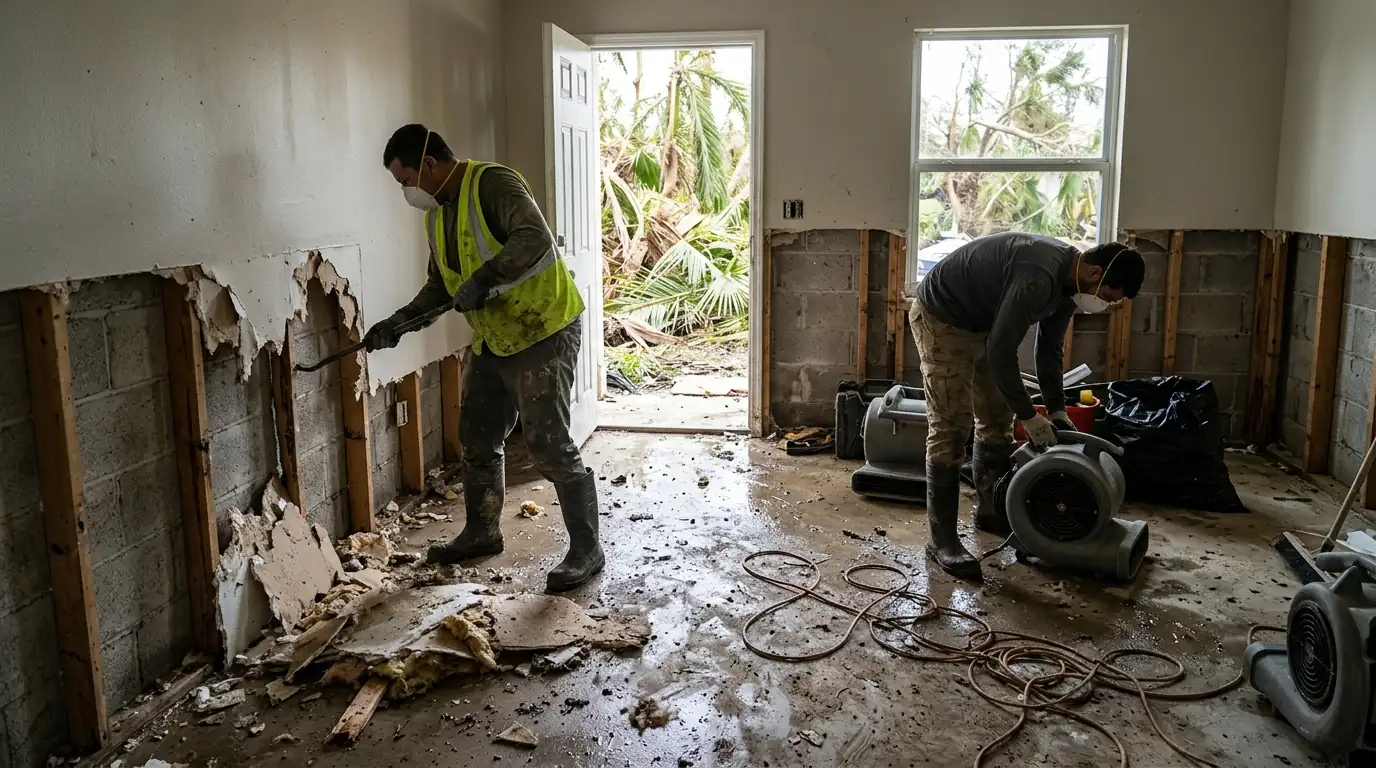
New Kingston covers all of Miami-Dade County from our Brickell office, 24/7: water extraction and drying, flood and surge cleanup, roof tarping and board-up, soot and odor work, mold removal and rebuilding. Every rebuild here is built to the county's strict hurricane wind and impact rules. Call (786) 664-2643 at any hour.
It is Florida's southeastern-most mainland county, with Broward to the north and the Keys to the south. About 2.7 million people lived here at the 2020 Census, and the 2024 estimate is about 2.84 million. The county has 34 incorporated municipalities, and as of 2013 about 52% of residents lived in unincorporated areas.
The county seat is the City of Miami, which is also where our crews are based, at 1450 Brickell Ave. From there we cover the county for water, storm, fire, smoke and mold damage, with a separate page on this site for each city and Miami neighborhood we serve.
Know your storm surge zone before June
Miami-Dade uses five storm surge planning zones, A through E. Zone A can flood from surge in a Category 1, while Zone E is at risk only in a Category 5. Evacuations follow each storm's track and projected surge, not just its category, so search your address on the Know Your Zone page and sign up for Miami-Dade Alerts.
Mobile home residents and anyone who depends on powered medical equipment should leave under any evacuation order. When you come home, photograph the damage before cleaning anything, then call about hurricane damage restoration once it is safe.
One county, very different buildings
Miami-Dade has about 1.1 million housing units. High-rise condos line the coast and the urban core, 1920s historic neighborhoods sit inland, and large post-war and later concrete-block suburbs spread west and south. About 52.2% of units are owner-occupied.
Each type fails in its own way. Towers get unit-to-unit leak chains and wind-driven rain through windows. Older houses have aging roofs, cast-iron drains and original wiring. Concrete-block homes stand up to wind but hold moisture in the block and slab after a flood. We plan drying around the building in front of us.
The storms and floods that shaped local building
Those storms are a big part of why all of Miami-Dade falls inside the strictest hurricane section of the state code, designed for 175 mph winds on an ordinary home. Permitted major work on an older home has to meet that current code, which affects roof, window and door repairs after any of these events.
- August 24, 1992: Hurricane Andrew caused more than $25 billion in damage, almost all in southern Dade
- October 24, 2005: Hurricane Wilma brought about 4 ft of surge at Virginia Key and broke high-rise windows
- September 10, 2017: Hurricane Irma pushed 3 to 5 ft of bay surge ashore from Homestead to Brickell
- Late May 2020: about 18.5 inches over four days flooded Brickell, Morningside and Belle Meade
- June 11 to 14, 2024: more than 22 inches in northeast Miami-Dade and a county local emergency