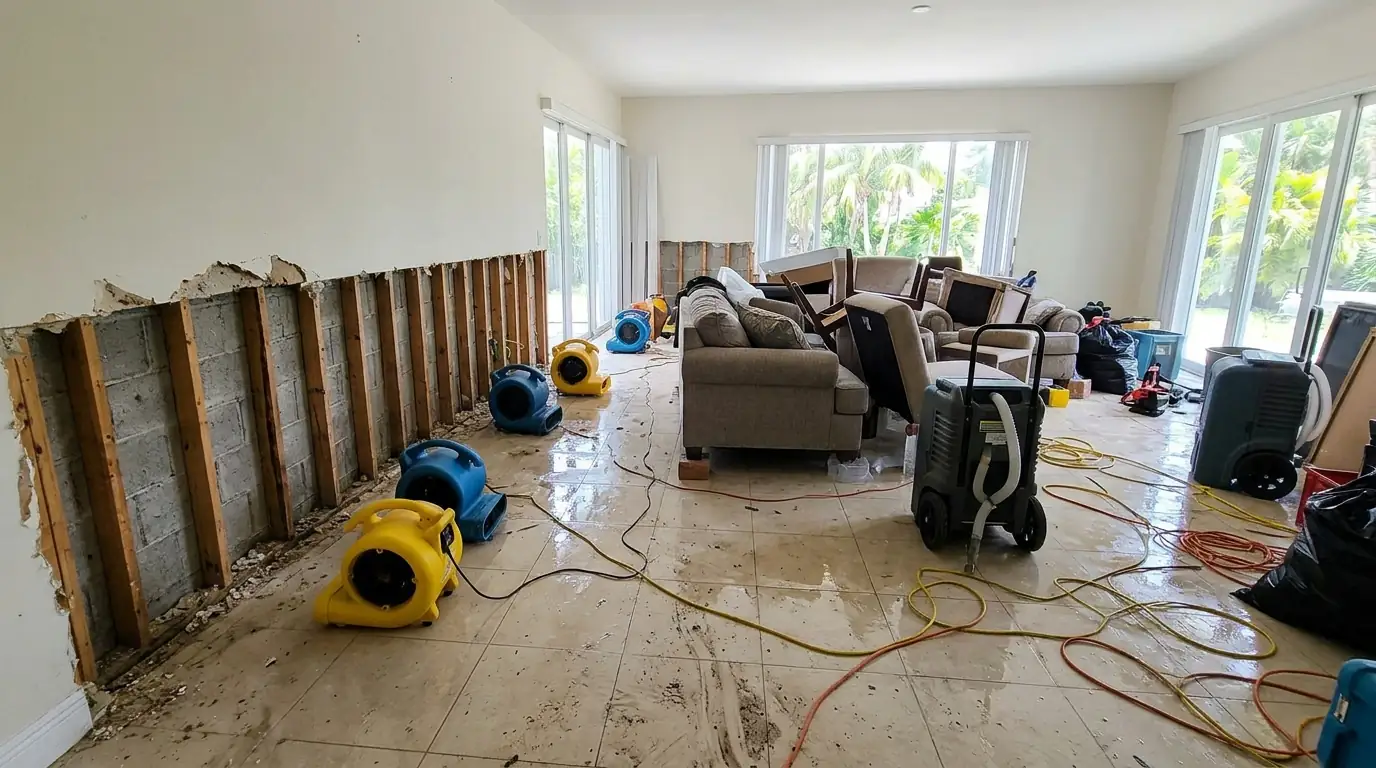
To keep mold from starting after a flood, the water has to be extracted quickly, wet drywall and insulation cut out above the waterline, surfaces cleaned and treated with an antimicrobial, and the structure dried with dehumidifiers and air movers until readings reach dry goal. EPA's guidance is to dry wet materials within 24 to 48 hours.
This page is about the window between the flood and the first spots. EPA advises cleaning and drying damp or wet building materials within 24 to 48 hours to prevent mold growth, and in a Miami summer that clock feels short. Walls, cabinets and floors start soaking up moisture from the moment water touches them.
Prevention is mostly about speed and thoroughness: getting water out, opening the materials that cannot dry in place, treating what floodwater touched, and proving the structure is dry before anything is closed up again.
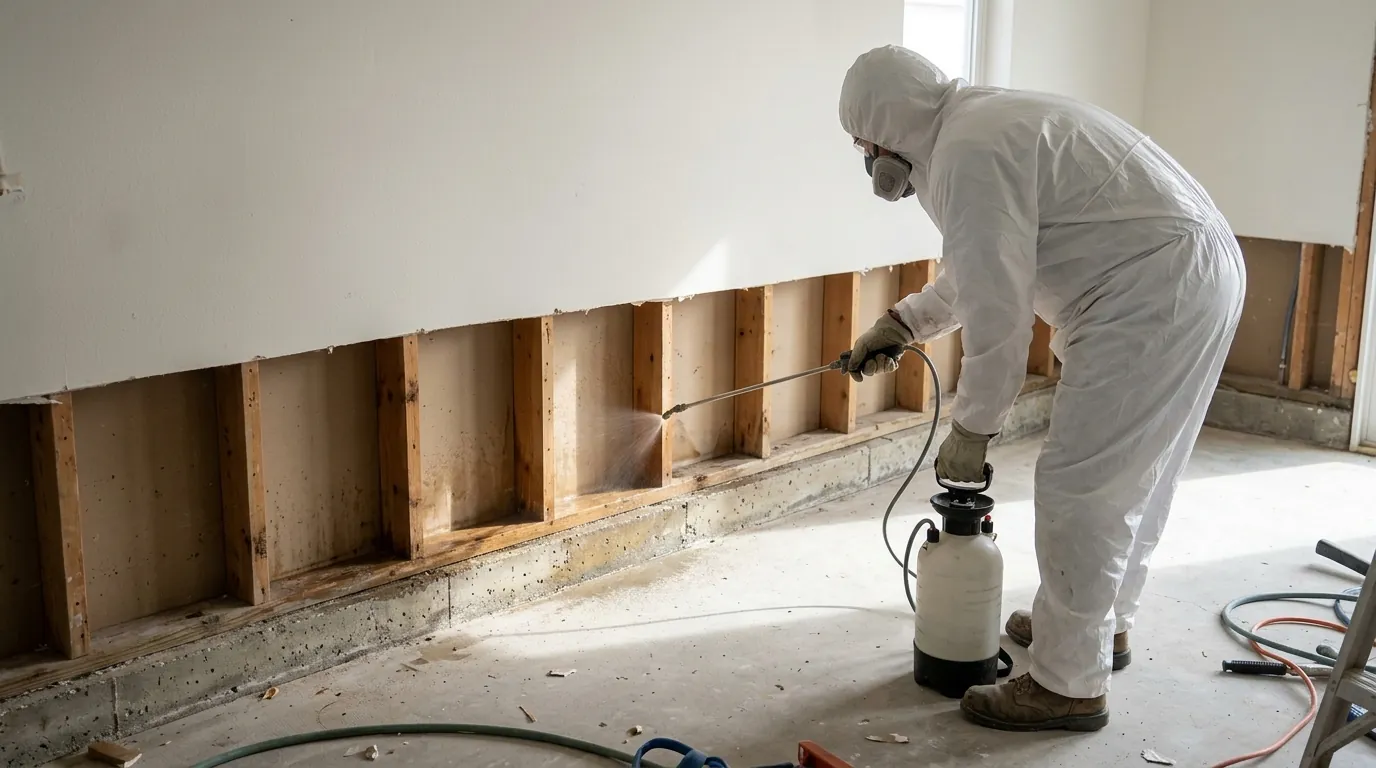
The 24 to 48 hour window in a Miami summer
Miami-Dade lists its rainy season as May 15 through October 15, and NWS Miami reports that dew points sit in the lower to mid 70s through most of that stretch. The outdoor air is already carrying a lot of moisture, so opening windows to dry a flooded room often adds water instead of removing it.
Mechanical drying works better. Dehumidifiers pull water out of the air inside the house, air movers push dry air across wet surfaces, and the AC, if it is safe to run, helps hold the indoor humidity down. EPA's target range of 30 to 60 percent indoor humidity is the goal we work toward.
When the power is out after a storm, the window gets tighter, and New Kingston crews bring generators to run the drying equipment.
Floodwater is not clean water
Restoration guidelines based on IICRC S500 sort water into three categories. A broken supply line is Category 1, or clean. Washer discharge and AC condensate are Category 2, or gray. Sewage and rising floodwater from outside are Category 3, or black, because they carry soil, bacteria and debris.
That category changes the prevention plan. Porous materials touched by floodwater from the street, a canal or a backed-up drain are usually removed instead of dried in place, and the surfaces left behind are cleaned and treated. The same guidelines note that untreated Category 2 water can turn into Category 3 after about 48 hours, so even a clean-looking leak gets worse if it sits.
When the flooding came from a sewer backup, the job follows sewage backup cleanup procedures first, and mold prevention is built into that work.
- Category 1: clean supply water
- Category 2: gray water such as washer or AC discharge
- Category 3: sewage and outside floodwater