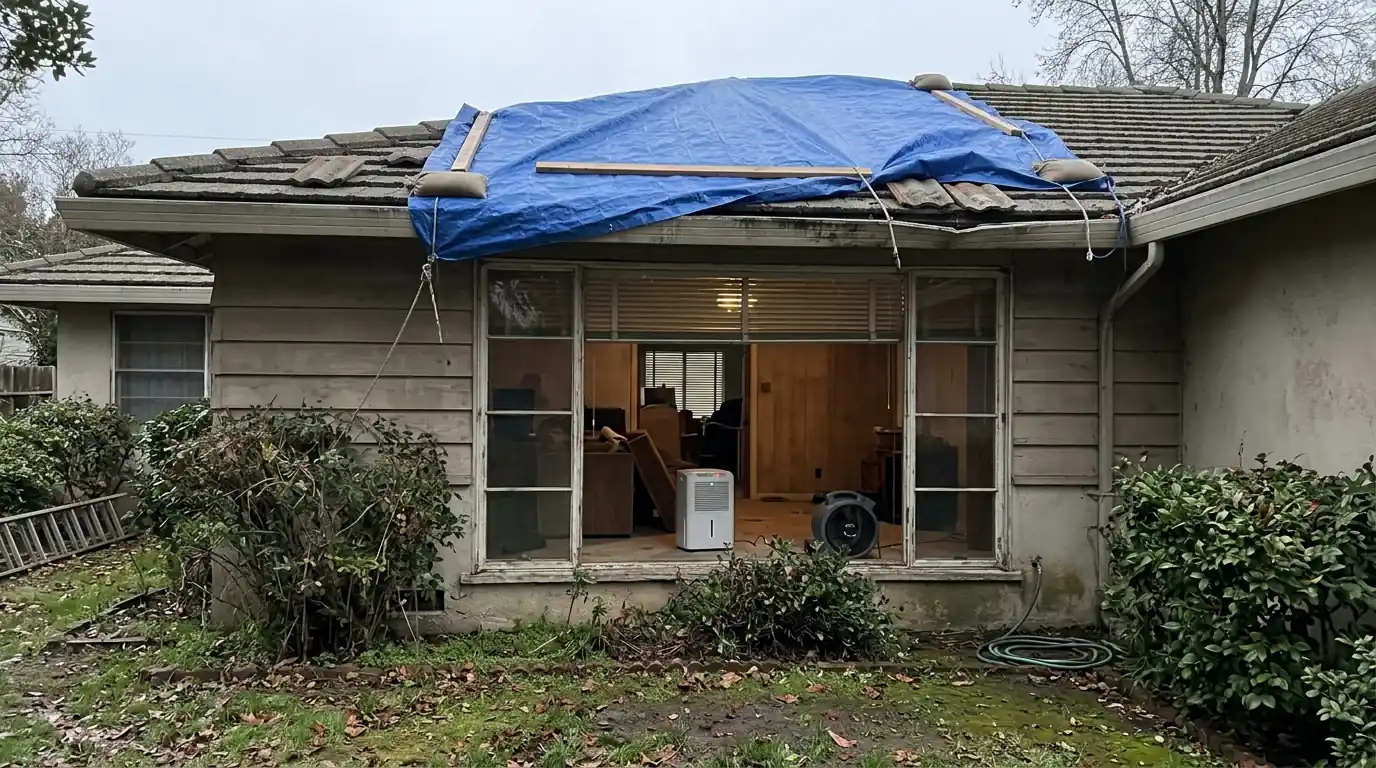
After a hurricane hits your Miramar home, stay out of rooms with sagging ceilings and keep clear of downed lines. Photograph the damage from outside and in. Then call: the crew tarps open roof areas, boards broken windows, pulls out standing water and starts drying, so the damage you can see now does not become mold and rot later.
Miramar was incorporated in 1955 and named after the Miramar area of Havana, Cuba. It grew from 5,485 residents in 1960 to 122,041 in 2010, and today it runs along the Miami-Dade line from State Road 7 all the way west to the Everglades.
Our crews leave from Brickell, cross the county line on the Turnpike or I-75, and are working in Miramar the same day. The phone is answered 24/7, including the hours right after a storm passes.
East side: 1950s homes and older roofs
The eastern half of the city holds the older single-level neighborhoods: Miramar Isles from the 1950s, Miramar Tropical and Welwyn Park, plus a number of older condos. These houses carry decades of sun, rain and storm cycles on their roofs and plumbing.
An aging roof often holds until a strong wind lifts a few shingles or cracks old tile. Then rain gets under the covering, soaks the decking and finds its way into the attic and ceiling. Emergency roof tarping stops that flow until the roof can be replaced.
Older homes may also have original openings without impact protection. A post-Wilma review in Miami-Dade found that buildings built under the post-Andrew code held up well, while damage clustered in older or poorly kept structures.
West side: lake lots and newer subdivisions
West of the Turnpike, most of the city was built in the early 2000s, in lake-dotted communities like Nautica, Riviera Isles and Harbour Lake Estates. The median Miramar home dates to 1997.
Newer construction handles wind better, but lakefront lots add exposure when heavy rain piles up. The June 2024 storms dropped 9.65 inches here, and Local10 reported Miramar had the most rainfall in the region when Tropical Storm Eta crossed South Florida in November 2020.
In these two-story homes, water from a damaged upper window can run inside the wall to the first floor. Moisture meters and a thermal camera show where it went before anything is opened.