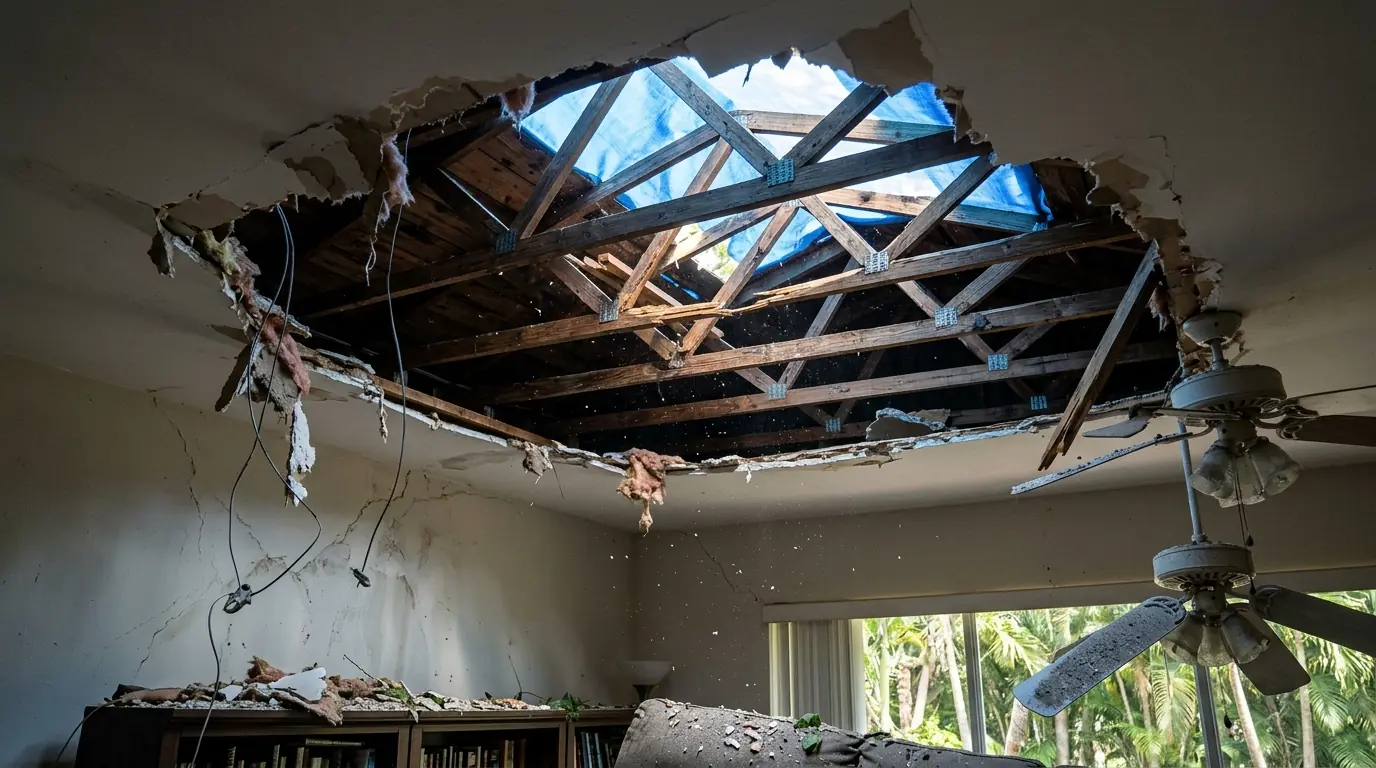
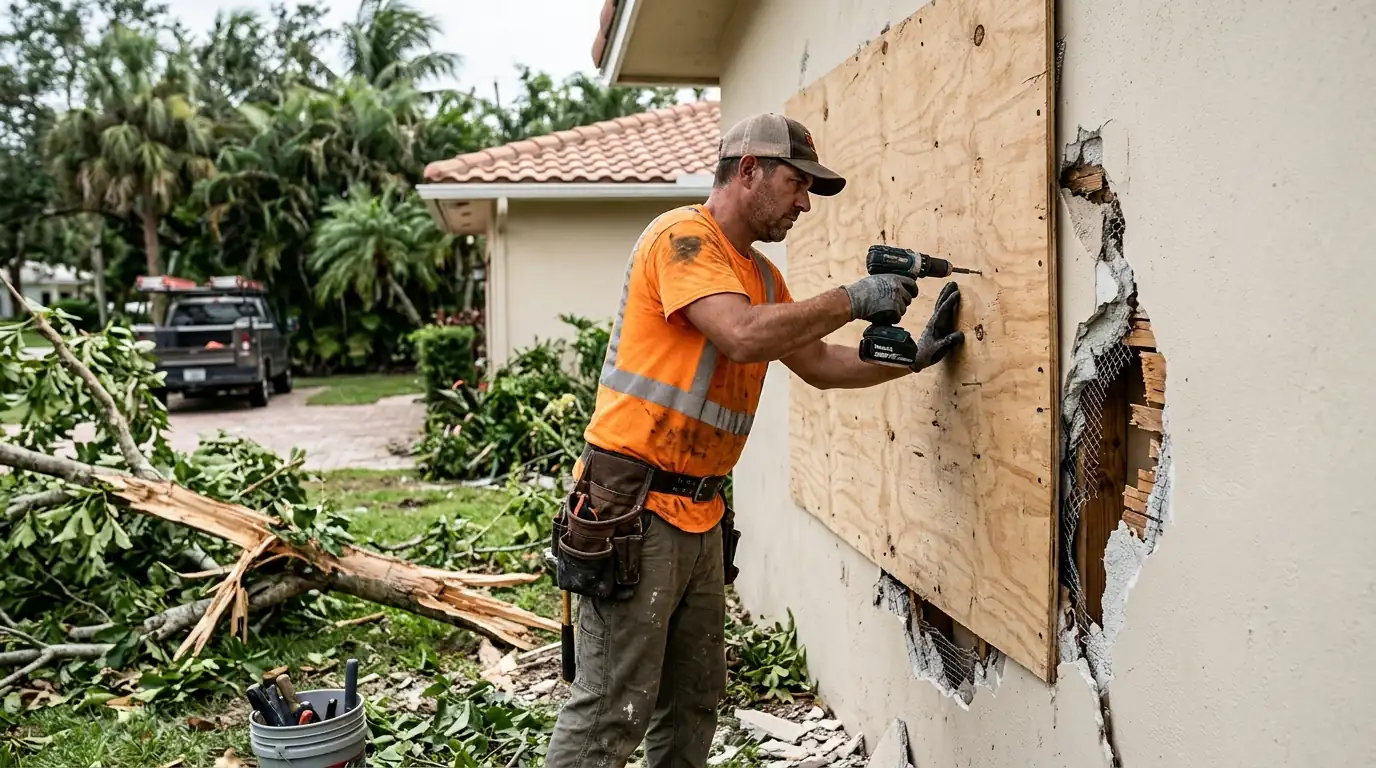
After a tree hits a home, get everyone out of the affected rooms, stay clear of downed lines and call a tree service to remove it. Our crew then tarps or boards the opening, inspects rafters, trusses and walls, removes wet insulation and drywall, dries the structure and rebuilds the interior. Broken trusses may need a structural engineer's repair design before framing work starts.
Tree damage is a two-trade job. A tree service removes the tree, often with a crane or rigging so the weight does not shift onto the house again. Our crews handle what the tree left behind: covering the opening, checking the framing, drying the rain that came in and rebuilding the rooms.
The order matters. Nobody should go on the roof or into the room under the trunk until the tree is off, and New Kingston coordinates with your tree service so a tarp or plywood goes on as soon as the opening is clear.
Safety before anything else
Leave rooms under the impact area, especially if the ceiling is cracked or bowed. If branches touch a power line or the service drop to your house, stay back and call the utility. Shut off the main breaker only if you can reach it safely and the panel is dry.
Do not try to cut limbs off the roof yourself. Branches under tension can spring when cut, and the weight can shift onto the framing. A tree service has the rigging to lift the tree off in pieces.
What a tree breaks inside the structure
Most South Florida homes have wood trusses or rafters sitting on concrete block walls capped with a tie beam. A heavy trunk can crack trusses, split roof decking, break the ceiling drywall below and, in a hard hit, crack the block or the tie beam.
We open the ceiling where needed to see the framing. Cracked or broken trusses are photographed and measured, and when the damage is structural, the repair follows a structural engineer's design through the permit process.
Damage to the roof covering goes to your roofer once the framing is sound. Until then the opening stays tarped and the house stays dry.