Skip to content
Water, fire, storm and mold calls answered 24/7 across Miami-Dade and Broward(786) 664-2643
New KingstonWater & Restoration · Miami(786) 664-2643Answered 24/7
Mold remediation

Mold remediation in Miami that fixes the moisture too

Mold in your home is almost always a water problem wearing a different face, so scrubbing the spots without finding the leak, the condensation or the trapped damp only buys you a few clean weeks.

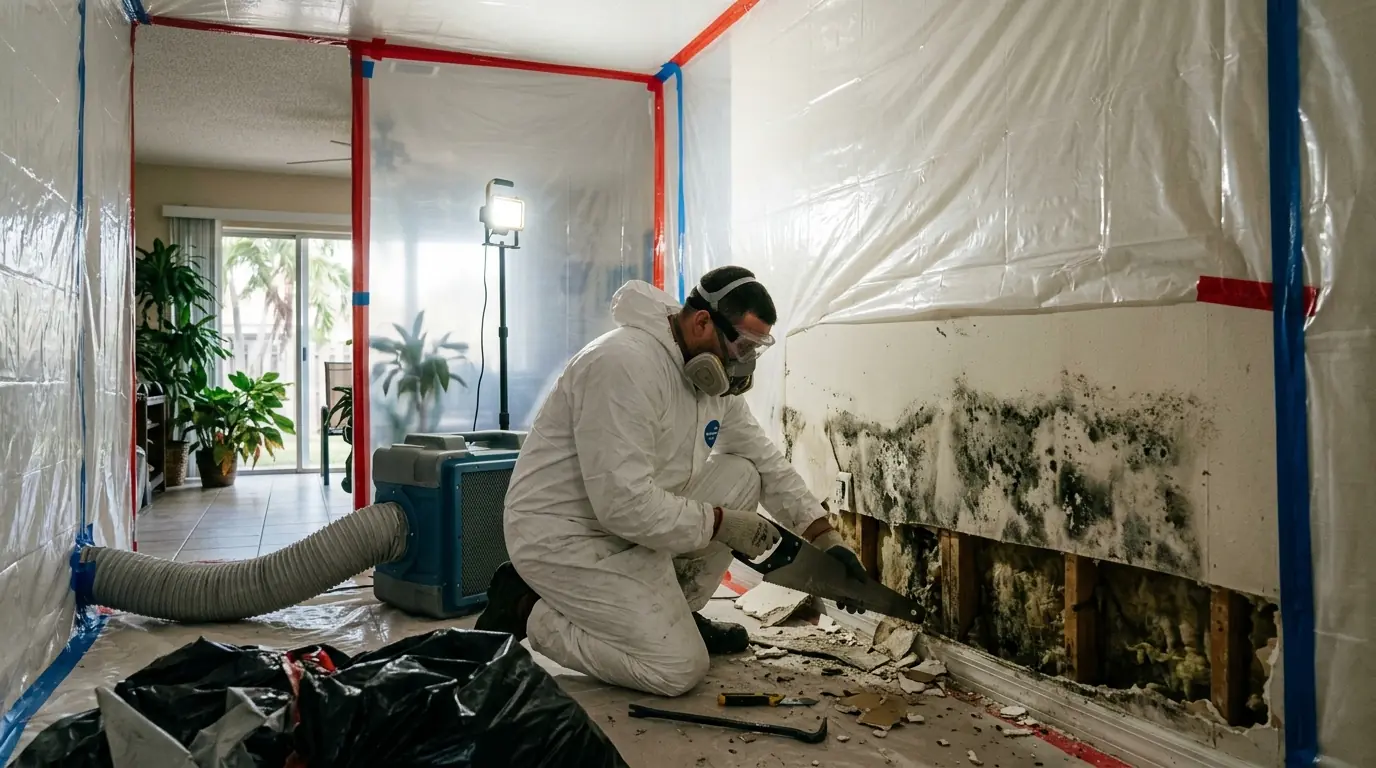
Restoration technician in protective suit cutting moldy drywall inside plastic containment in a Miami living room with a HEPA air scrubber running
Quick answer

Mold remediation means sealing off the affected room, removing moldy drywall, baseboard or insulation, HEPA vacuuming and cleaning the framing, and drying the space to a measured goal. The leak or damp behind it gets fixed too. Any testing or clearance comes from a separate licensed assessor you hire, never from the crew doing the cleanup.

Our crews treat every mold job in two halves. First we contain the area and remove the growth and the materials it has rooted into. Then we find and fix or dry the moisture that fed it, because in a Miami house that moisture rarely leaves on its own.

You will also see New Kingston work alongside an independent mold assessor that you hire. Florida separates those two jobs by law, and the split protects you: the company that cleans the mold never grades its own work.
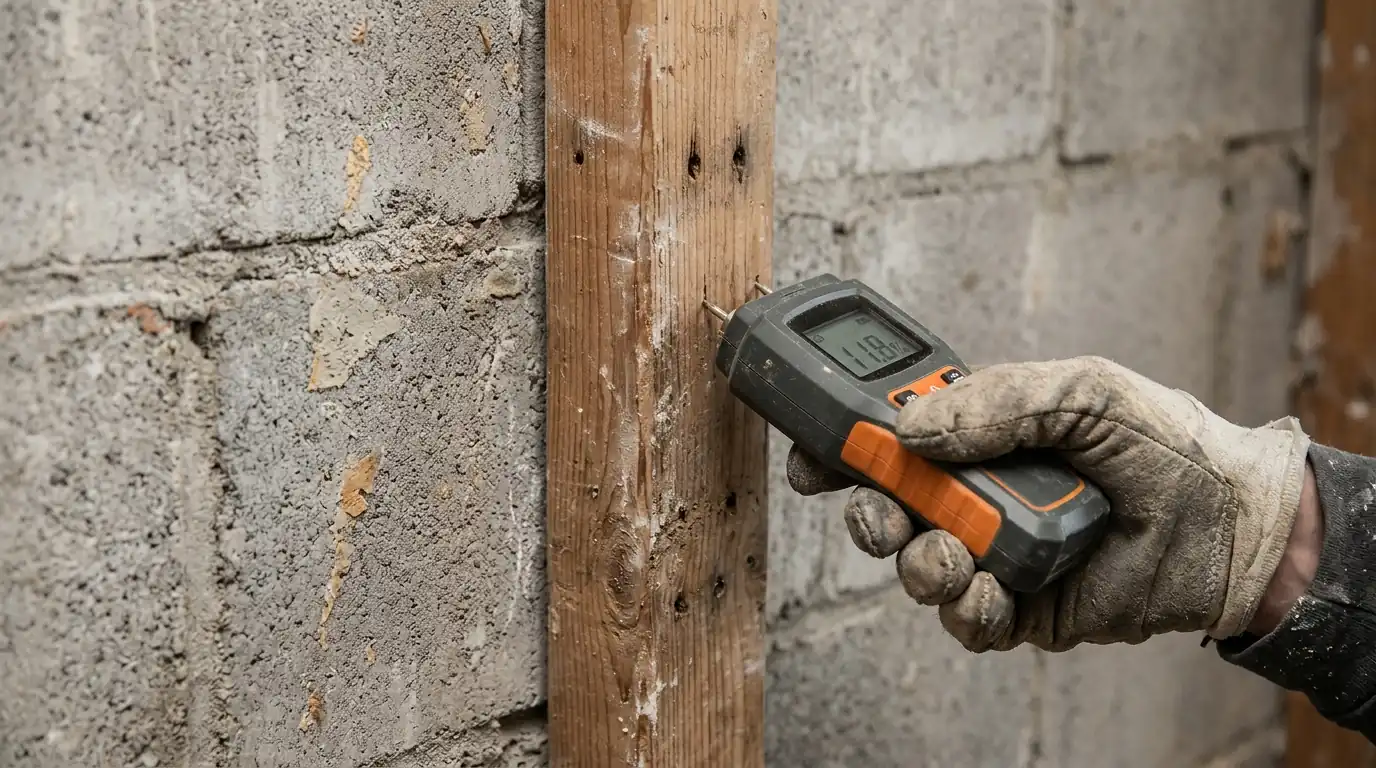
Close view of cleaned wooden furring strips on a concrete block wall after moldy drywall was removed, with a moisture meter pressed against the wood

Why cleaning the spots alone does not hold up here

Miami air carries a lot of water. Relative humidity averages about 84 percent in the morning and 62 percent in the afternoon, and from late May to mid October dew points stay above 70 degrees. Any surface a little cooler or wetter than the room can hold enough moisture for mold.

That is why a wiped wall comes back. A slow drip from a supply line, a sweating duct boot or a gap in a window sill keeps one patch damp, and spores settle there again. EPA suggests indoor humidity between 30 and 60 percent and drying wet materials within 24 to 48 hours, and our work is built around getting your home back inside those limits.

Who does what: your assessor and our remediation crew

Florida law treats mold work involving more than 10 square feet of growth as assessment or remediation, and each role needs its own state license. A separate rule bars an assessor from remediating a home it assessed in the past 12 months, and bars a remediator from assessing a home it cleaned in that window.

So we do the removal, cleaning and drying, and we do not take air samples, swabs or clearance tests. If you want testing before the work or a clearance check after it, you hire an independent licensed mold assessor, and we share our moisture logs and photos so the two reports line up.

Signs to act on

When to call about mold remediation

  • A smell that keeps coming backA musty, earthy odor that returns a day after you air out a room usually means growth you cannot see yet.
  • Spots that return after bleachIf the same patch reappears in the same place, the material underneath is still damp and still feeding it.
  • Bubbling paint on a block wallBlistered paint on the inside of a CBS exterior wall often points to water reaching the drywall over the furring strips.
  • Baseboards that feel softSwollen or separating baseboards near a bathroom, kitchen or AC closet show water has been wicking up the wall.
  • A patch bigger than a doormatOnce growth passes roughly 3 feet by 3 feet, EPA guidance points to professional help instead of a weekend cleanup.
  • A ceiling stain that widensA brown ring slowly growing below a bathroom, roof valley or upstairs unit is moisture that should be opened up soon.

What containment and removal look like in your rooms

Before anything is cut, we hang plastic sheeting floor to ceiling, add a zip door and run a HEPA air scrubber that pulls air out of the work area, so dust moves away from the rest of the house. The AC return in that space gets covered.

Porous materials with growth in them, such as drywall, ceiling board, carpet pad and fiberglass insulation, are cut out and bagged inside the containment. Framing, block and concrete get HEPA vacuumed and cleaned until the surface is clear. The work follows the IICRC S520 mold remediation standard.

  • Sheeting, zip door and HEPA scrubber on every job
  • Moldy drywall and insulation bagged in place
  • Studs, furring strips and block cleaned, not just sprayed
  • Daily moisture readings logged with photos

Fixing the source so the growth stays gone

The source is usually close by: a failed wax ring under a toilet, a pinhole in a copper line, a clogged AC condensate drain, a window that leaks in sideways rain, or roof flashing that lets go in a summer storm.

Where the fix is part of our work, such as replacing wet framing or drying the structure, we handle it in the same visit. When it needs a plumber, roofer or HVAC technician, we show you exactly what we found so that trade can fix it before the wall is closed. Our hidden moisture detection is often how that answer comes out.

How the job runs

From your call to a finished room

  1. Phone walk-throughYou call, describe what you see and smell, and we set a visit. If water is still active, we tell you how to shut it off first.
  2. Moisture map and planThe crew lead reads the surrounding materials, photographs the growth and explains how far removal needs to go.
  3. Containment goes upSheeting, a zip door and a HEPA scrubber isolate the area from the rest of the home.
  4. Remove and cleanMoldy porous materials are bagged, and the framing and block behind them are HEPA vacuumed and cleaned.
  5. Dry and fix the sourceDehumidifiers run until readings hit dry goal, and the leak behind the growth is repaired by us or the right trade.
  6. Clearance, then rebuildYour independent assessor can check the area, and we close and finish the walls when you are ready.

Questions

Mold Remediation questions

Can your crew give me a clearance report when the job is done?

No. Florida law keeps remediation and assessment separate, so a clearance report has to come from an independent licensed mold assessor you hire. We give that assessor our photos and moisture readings.

How much mold is too much to handle on my own?

EPA guidance says a patch under about 10 square feet can usually be cleaned by the homeowner, while larger areas or growth tied to extensive water damage call for an experienced professional.

Will painting over mold stop it from spreading?

Paint hides the stain for a while but does not dry the wall or remove the growth inside it. The patch usually comes back through the paint once the damp underneath keeps feeding it.

How do you know the moisture problem is really fixed?

We take readings on the same spots every day. When the wet materials match dry, unaffected materials elsewhere in your home, we call it dry and show you the log.

What happens to the walls you cut open?

Once the area is dry, we close it with new drywall, tape, texture and paint. Our drywall replacement crews handle that so the room looks the way it did before.

Water, smoke or storm damage right now?

Call (786) 664-2643. A person answers at any hour, asks what happened, and tells you what to do while the crew gets moving.

Call (786) 664-2643 · 24/7