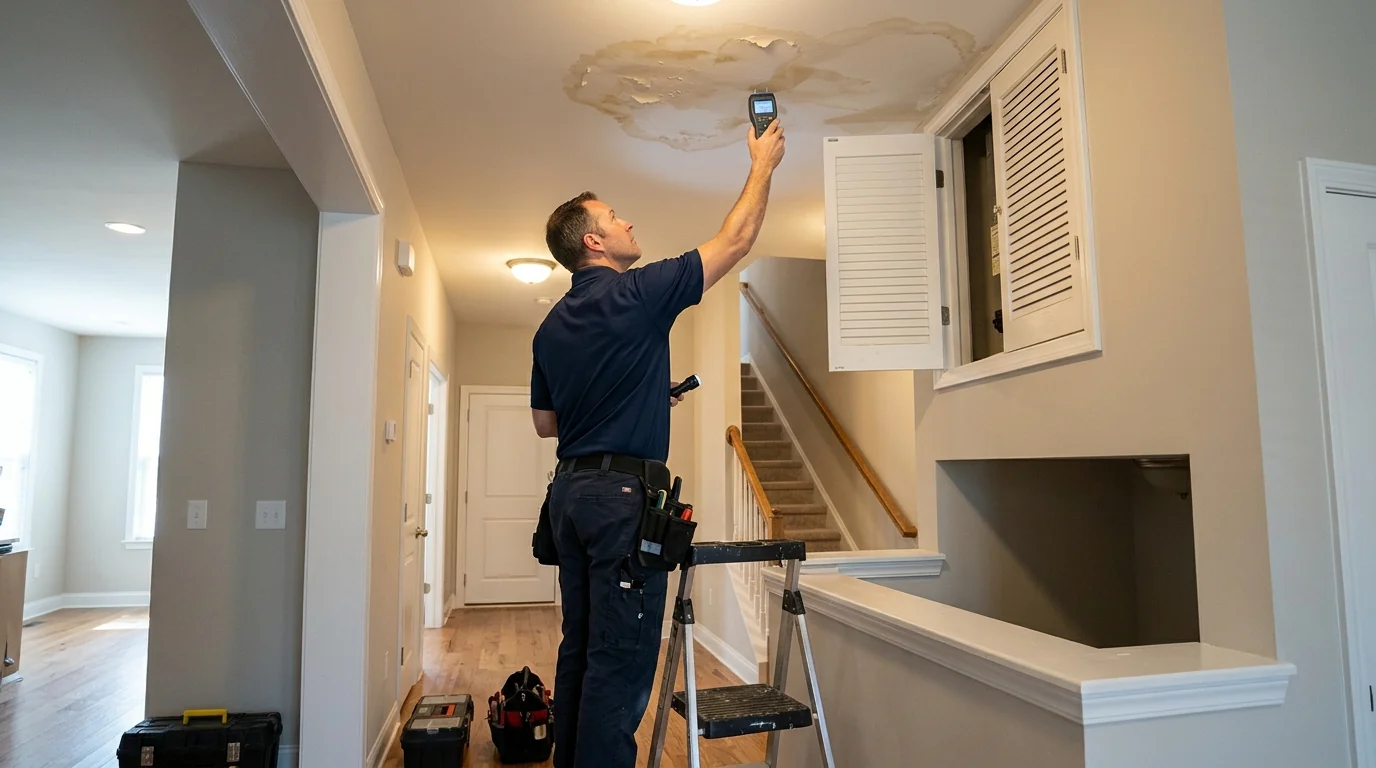
For a leak or mold in Doral, call (786) 664-2643 any hour. The crew finds the wet area with meters and thermal imaging, stops the source with your plumber or AC tech, sets containment if mold is present, removes affected material and dries the rest. Testing and clearance come from an independent licensed mold assessor you hire.
Most of Doral went up after 1980, from the gated single-family and townhome communities that grew after the 1983 to 1985 county building moratorium to the newer mid-rise condos in Downtown Doral and CityPlace. These homes are tight, efficient and cooled all year, which works well until water gets somewhere it should not.
The calls here lean toward leaks and mold more than storm damage: an AC drain pan spilling into a hallway ceiling, a water heater closet that smells musty, a warm patch of tile that turns out to be a slab leak. The land also floods, so street water is part of the picture too.
AC condensate, the usual cause of a Doral ceiling stain
Algae grows in condensate pans and traps, and once the drain line clogs, water spills out of the primary pan into the ceiling, closet or wall unless a secondary pan or a float shutoff switch is in place. In townhomes with the air handler upstairs, that water tends to appear as a stain on the first-floor ceiling.
AC leak water damage jobs start by finding how far the water traveled, then drying the drywall, insulation and framing around the closet. Have your AC tech clear the line and test the float switch before the ceiling gets closed up.
Slab leaks under newer floors
A slab leak is a pressurized line under the concrete, and the signs are easy to miss: a warm spot underfoot, a water bill that jumps, baseboards swelling along one wall, or wood flooring that starts to cup.
Your plumber finds and repairs the pipe. We handle the slab leak water damage: pulling up wet flooring, drying the slab and the bottom of the walls, and replacing what had to come out.
Mold in sealed, air-conditioned homes
Tight buildings hold moisture once it gets in. A small leak behind a vanity or inside an AC closet can start mold within a couple of days, which is why EPA guidance is to dry wet materials within 24 to 48 hours and keep indoor humidity between 30 and 60 percent.
Mold remediation follows the IICRC S520 standard: containment, air filtration, removal of growth and affected material, cleaning and drying. In Florida, mold assessors and remediators are licensed separately and cannot be the same company on the same job, so an independent assessor does any testing and clearance.