Skip to content
Water, fire, storm and mold calls answered 24/7 across Miami-Dade and Broward(786) 664-2643
New KingstonWater & Restoration · Miami(786) 664-2643Answered 24/7
Tank and tankless leaks

Water heater leak cleanup in Miami

A water heater keeps refilling as it leaks, so a tank that rusts through at the bottom can send its full volume and then a steady stream across your laundry closet, garage or kitchen floor.

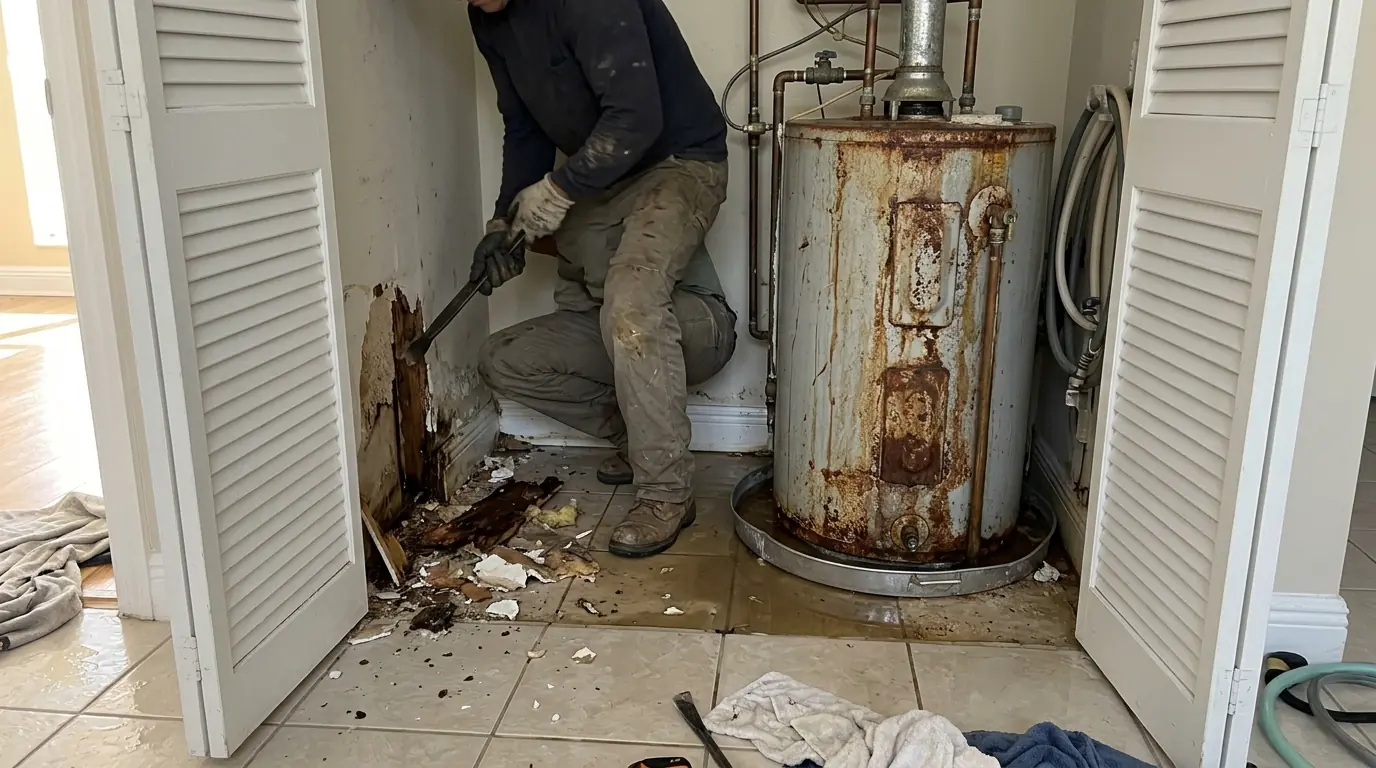
Rusted tank water heater in a Miami laundry closet with water across the tile and wet baseboards being removed
Quick answer

Shut the cold water valve at the top of the heater, then turn off the power at the breaker for an electric unit, or set a gas unit to off or pilot. Keep away from hot water. A restoration crew removes the water, dries the closet walls and slab, and replaces swollen trim or drywall after your plumber deals with the heater.

Most Miami water heaters sit in a garage, a laundry or utility closet, or a small closet off the kitchen. In condos they are often tucked in a closet near the entry, right on top of the unit below. Wherever yours is, the leak usually reaches the surrounding walls before anyone notices.

This page covers the cleanup side: drying the floor, the walls, the cabinets and anything nearby. The heater itself is a job for your plumber, who can tell you whether to repair or replace it.
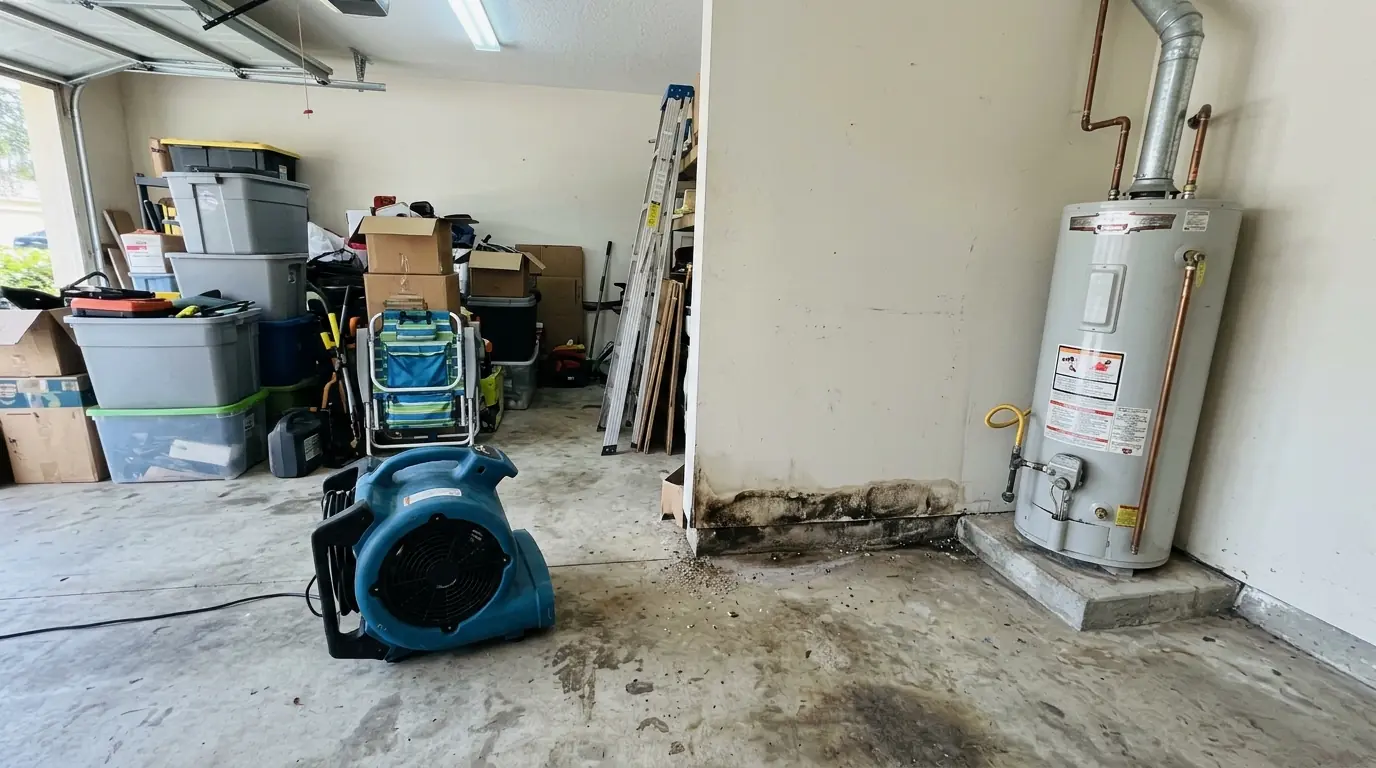
Air mover drying the lower drywall of a garage wall beside a gas water heater in a South Florida home

Shutting down a leaking heater safely

The cold water inlet valve sits on the pipe at the top of the tank. Turn it off to stop the tank from refilling. If you cannot reach it or it will not turn, close the main water valve for the house or unit.

Next, cut the energy. For an electric heater, flip the breaker marked for it. For gas, turn the control to off or pilot and keep it there until a plumber checks it. Do not open the drain valve or touch the relief valve to empty the tank; the water inside can be scalding.

Once the water and energy are off, move boxes, laundry baskets and anything stored around the heater out of the wet area, and photograph the tank, the floor and the label with the model and date.

Garages, laundry closets and condo closets

In a garage, water spreads across the slab and under the door into the house. The garage floor itself dries easily, but the drywall on the shared wall and any stored cardboard soak it up fast.

Laundry and utility closets are tighter. The heater often shares a closet with the washer, so water runs under the washer, into the wall behind it and under the trim of nearby rooms. Our appliance leak cleanup page covers washer leaks in the same space.

In a condo, a tank failure can reach the unit below within hours. Let management know right away, and see our condo leak restoration page for how that coordination works.

Signs to act on

When to call about water heater leak cleanup

  • Rust at the tank baseRust streaks or flakes around the bottom of a tank point to corrosion from the inside.
  • Water in the drain panAny water in the pan under the heater means something is leaking or the relief valve is discharging.
  • A dripping relief valve pipeWater coming from the discharge line on the side of the tank can mean excess pressure or a failing valve.
  • Swollen laundry room baseboardsTrim that puffs up next to the heater closet shows water spreading under the wall.
  • Rumbling or popping soundsSediment buildup in an older tank makes noise and often comes before a leak.
  • Hot water runs out fastLosing hot water sooner than usual can point to an aging heater on its way out.

Tank, tankless and what fails

Tank heaters most often fail at the bottom, where sediment and corrosion eat through the steel. Fittings at the top, the drain valve and the relief valve line are the other common leak points. Leaks from a failing tank tend to get worse, not better.

Tankless units hold much less water, so a failure is usually a slower drip from a fitting or a line. They are often wall-mounted outside or in a garage, which limits indoor damage but can soak the wall where lines enter the house.

Your plumber decides the repair. The crew dries and rebuilds the space so the new heater goes into a dry, sound closet.

Drying the slab and walls around the heater

Hot water spreads fast and releases vapor, so closet walls soak higher than the floor puddle would suggest. The crew reads moisture up the walls and across the slab, removes baseboards and wicked drywall, and sets up structural drying in the closet and nearby rooms.

Supply water from a heater is usually clean, which keeps more material salvageable if drying starts quickly. A tank that leaked slowly for weeks is different: it may have left rust, sediment and growth behind the trim, which changes what gets removed.

  • Particleboard shelving and closet platforms usually come out
  • Baseboards are pulled to dry behind them
  • Drywall that wicked water is cut out above the wet line
  • Tile on the slab usually stays and is dried in place

How the job runs

From your call to a finished room

  1. Confirm water and power are offThe crew checks the inlet valve and the breaker or gas control before working near the heater.
  2. Extract the waterStanding water is removed from the closet, garage or laundry room and any rooms it reached.
  3. Map moisture in the wallsMeters read the closet walls, nearby rooms and the slab to find the edges of the wet area.
  4. Remove swollen materialsWet baseboards, shelving, platform wood and drywall are taken out and bagged.
  5. Dry the spaceAir movers and dehumidifiers run with daily readings until the closet and walls reach dry goal.
  6. Rebuild for the new heaterDrywall, trim and paint go back so your plumber can set the new unit in a dry space.

Questions

Water Heater Leak Cleanup questions

Is it safe to be near a water heater that is leaking?

Stay clear of hot water and steam and keep away from any wiring near the tank. Once the cold inlet and the power or gas are off, the risk drops. If you smell gas, leave the house and call the gas company from outside.

Does a drain pan under the heater prevent water damage?

A pan with a working drain catches small leaks and relief valve drips and sends them away. It cannot hold a tank that fails at the bottom, and a pan with no drain line only buys a little time. Check yours when the heater is serviced.

Should I drain the tank myself after it starts leaking?

Leave that to your plumber. The water inside can be very hot, and the drain valve on an older tank can snap or leak once opened. Turn off the water and power and let the plumber empty the tank as part of the repair or replacement.

Can the garage drywall be saved after a heater leak?

If the water was clean and drying starts fast, drywall that only got damp at the bottom can often be dried in place behind removed baseboards. Board that wicked water high up or sat wet for days is cut out and replaced.

My tankless heater is mounted outside. Can it still damage the house?

Yes, if a fitting leaks at the wall, water can run along the lines into the wall cavity. Check the inside of that wall for staining or swelling, especially behind cabinets or in a garage, and have the lines inspected.

Water, smoke or storm damage right now?

Call (786) 664-2643. A person answers at any hour, asks what happened, and tells you what to do while the crew gets moving.

Call (786) 664-2643 · 24/7