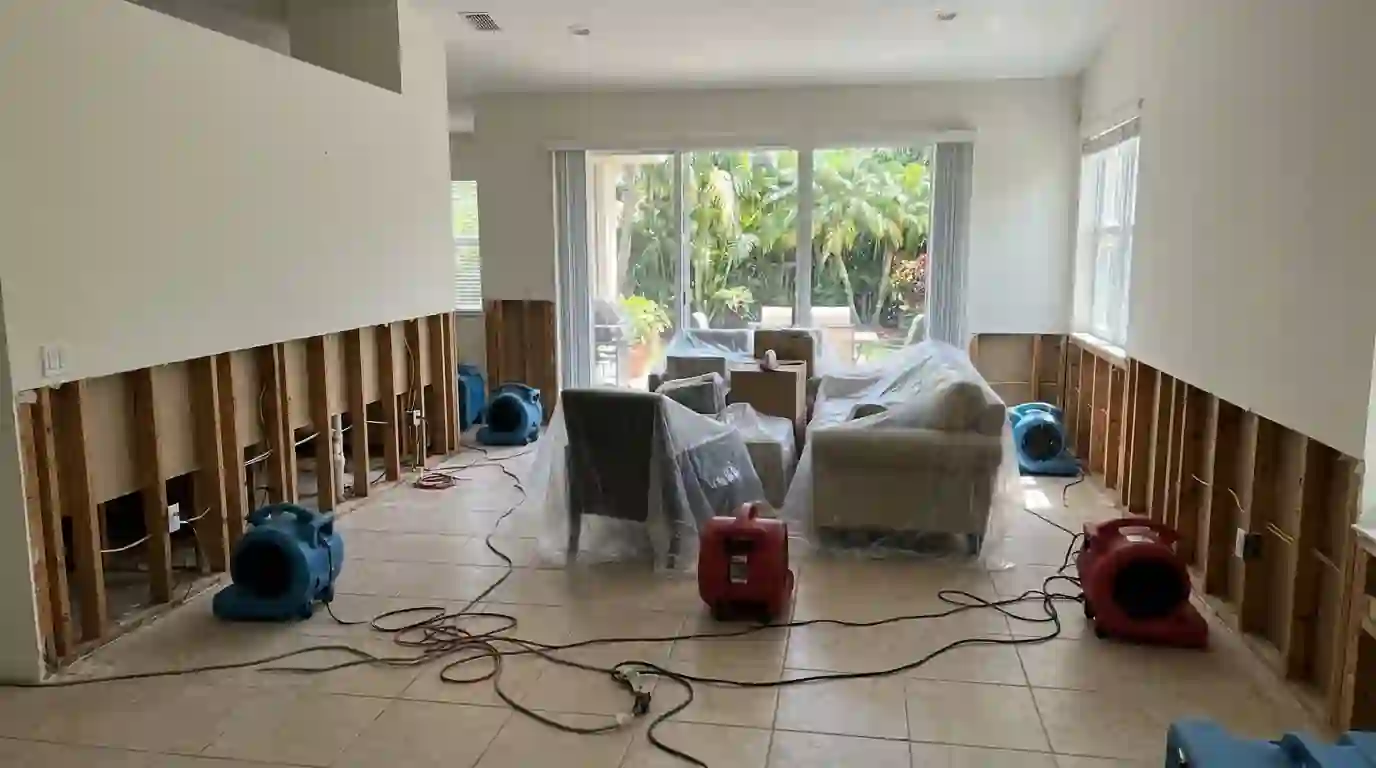
- A flood cut removes the lower section of drywall in a straight, level line above the wet area.
- It lets air reach the wall cavity and lets crews remove wet insulation and contaminated material.
- The height depends on how far water wicked up, the water category and the wall's construction.
- A straight cut makes the rebuild faster and cleaner than patching ragged holes.
Seeing a crew take a saw to your walls can be unsettling, especially if the drywall looks only a little damp. The flood cut is not about damage you can see. It is about water, contamination and moisture you cannot see inside the wall cavity, and about leaving a clean, straight edge that is easy to rebuild.
Here is what a flood cut is, how crews decide where to make it, and what happens between the cut and a finished wall.
What a flood cut is
A flood cut is a horizontal cut through drywall, made at a consistent height around a room, with everything below the line removed. The crew marks a level line, cuts along it, then pulls the lower panel section, the baseboard and any wet insulation behind it. What is left is open studs at the bottom of the wall and intact drywall above.
The term comes from flood work, where water rose from the floor and soaked the bottom of every wall in a room. Crews use the same technique after other large water losses too, from a burst supply line that ran overnight to a sewage backup.
Why not just dry the wall in place?
Sometimes crews can. After a clean-water leak caught early, drywall can often be dried in place with air movers, dehumidifiers and small holes drilled at the base for airflow. That is part of what structural drying is designed to do, and it is the preferred approach when it will work.
A flood cut becomes the better choice in a few situations:
- The water was Category 3, such as sewage or floodwater from outside, so the drywall and insulation it touched are contaminated.
- Insulation inside the wall is soaked; it holds water like a sponge and rarely dries in place.
- The water was gray, Category 2, and sat long enough that it may have become Category 3, which IICRC S500 guidelines put at about 48 hours untreated.
- Drywall has been wet long enough that it is soft, crumbling or already shows mold.
- The wall has a vapor barrier or layered finishes that trap moisture inside the cavity.
How crews pick the height
Drywall pulls water upward like a paper towel, so the wet zone is almost always higher than the water that sat on the floor. Before cutting, the crew takes moisture meter readings up the wall to find where the wet area ends, then adds a margin above that point.
Common cut heights follow standard drywall dimensions so the replacement pieces fit easily. A cut at 2 or 4 feet lines up with sheets that are 4 feet wide when laid horizontally, which means less cutting and fewer joints during the rebuild. If water wicked above 4 feet, the crew may cut higher or remove full sheets.
Height also depends on the room. Behind kitchen and bathroom cabinets, crews may cut differently or remove the cabinets first. In rooms with paneling, tile wainscoting or plaster, the approach changes to match the material.
What happens behind the cut
Once the lower drywall is off, the crew can see the inside of the wall. Wet insulation comes out. If the water was contaminated, the studs, bottom plate and slab edge are cleaned and disinfected. If there is early mold on the framing, it is cleaned as part of the job.
Then the drying starts. With the cavity open, air movers and dehumidifiers can dry the framing and the slab edge far faster than they could through a closed wall. Crews take daily moisture readings on the studs and plates until they reach a dry goal. In Miami's humid air this step matters even more, as explained in our article on mold and humidity.
Photos and readings at this stage are useful for your insurance file. Ask for pictures of the open wall, the insulation that was removed and the readings before and after drying. Our guide to documenting damage for a claim covers what else to keep.
Closing the wall back up
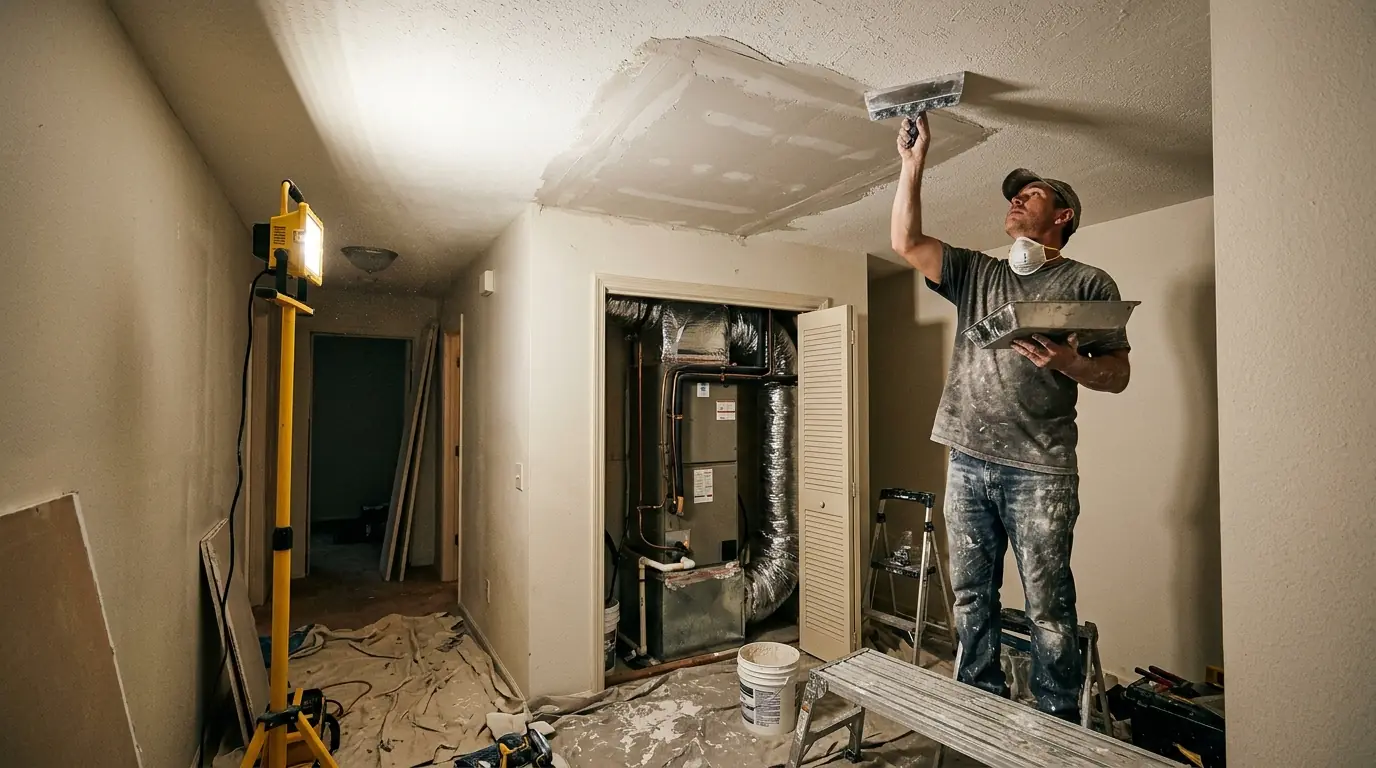
When the framing is dry, the wall can be rebuilt. New insulation goes in where it was removed. New drywall is cut to match the opening, screwed to the studs, taped and finished so the seam disappears. Texture is matched to the rest of the wall, then the whole wall is primed and painted, not just the new section, so the color is even.
Drywall replacement covers that finish work, and new baseboards go on last. Depending on the size of the job, closing up a room after a flood cut usually takes a few days of work spread over a week or more, because joint compound needs time to dry between coats. The restoration timeline estimator gives a rough picture for your situation.
Questions to ask before the crew cuts
A flood cut is a reasonable step, and a good crew will explain it before they start. Ask them where the moisture readings ended, why they chose the height, whether the water category requires removal or drying in place could work, and how they will protect the floors and the rest of the room from dust. Ask what happens to cabinets, built-ins and outlets in the cut zone.
If you have an insurance claim open, let your adjuster know a flood cut is planned and share the readings. Take your own photos before the cut too. Clear records of why the drywall came out make the rest of the claim simpler.
Common questions
Do flood cuts create a lot of dust in the house?
Cutting drywall does make dust, so crews usually cover floors and furniture, close off the work area with plastic and run air scrubbers with HEPA filters during the cut. On contaminated jobs the containment is stricter. Ask the crew how they plan to keep dust out of the rest of the house.
Can I stay in the house while the walls are open?
Often yes, if the work area can be closed off, the water was clean, and the kitchen and a bathroom are usable. Drying equipment is noisy and runs day and night, and some families choose to stay elsewhere for a few days. After a sewage backup, keeping people out of affected rooms is the safer choice.
Will the repaired wall look different from the rest?
It should not, if the drywall is finished well, the texture is matched and the whole wall is painted rather than only the patch. The most common giveaway is a visible seam along the cut line, which careful taping and feathering prevents. Ask to see the wall under a bright light before the paint goes on.