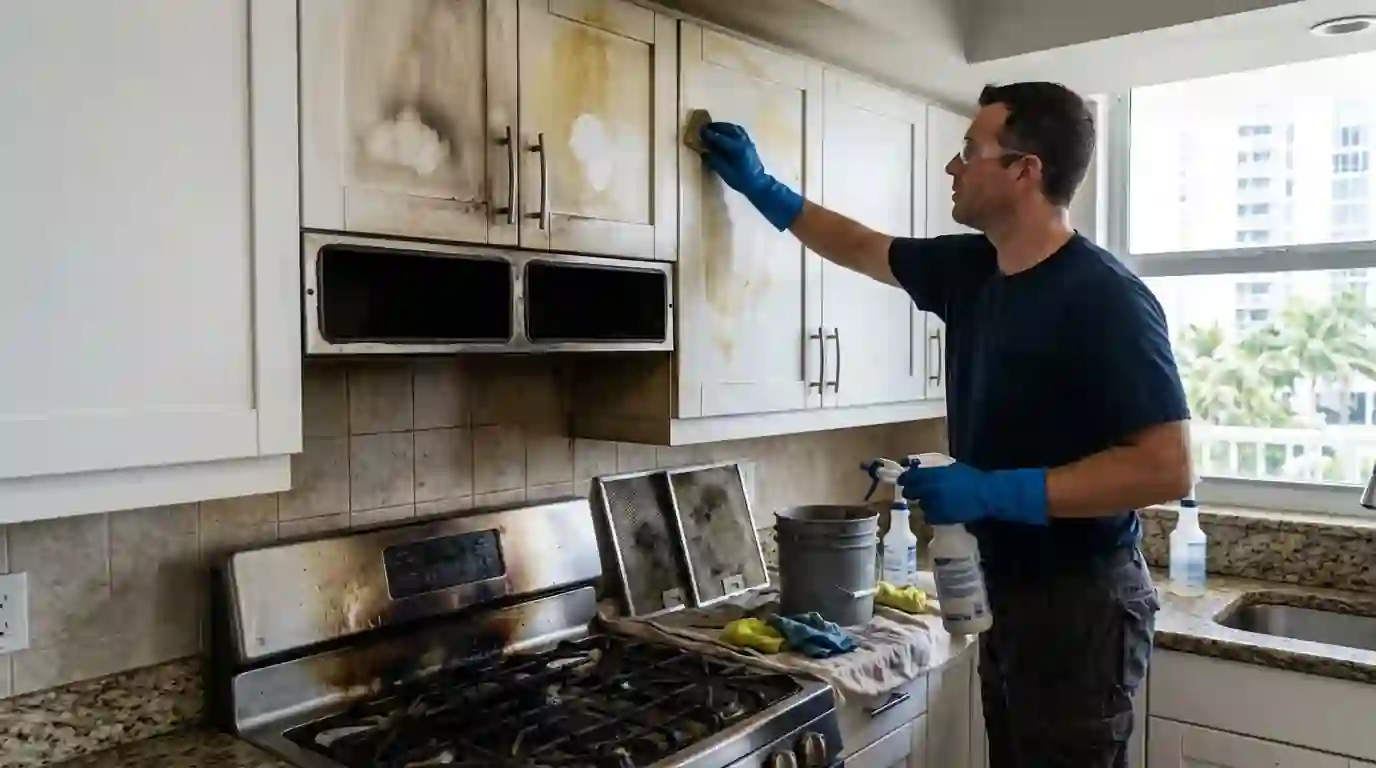
Kitchen fire cleanup removes extinguisher powder and greasy smoke residue from every surface, cleans or replaces scorched cabinets, the range hood and nearby appliances, deodorizes the kitchen and the rooms around it, and rebuilds what burned. A small stovetop fire often cleans up in a few days, while a cabinet fire usually means some replacement.
Kitchen fires are the most common kind of home fire by a wide margin. U.S. Fire Administration data show cooking caused 51 percent of residential building fires in its 2017 to 2019 averages, and unattended cooking was the top factor in the larger ones.
The fire itself is often small and short. What makes cleanup hard is what it leaves behind: grease and protein residue that is nearly invisible but smells strongly, scorched cabinets and range hoods, and fine powder from a dry chemical extinguisher that settles inside drawers, outlets and appliances.
Cleaning up after the extinguisher
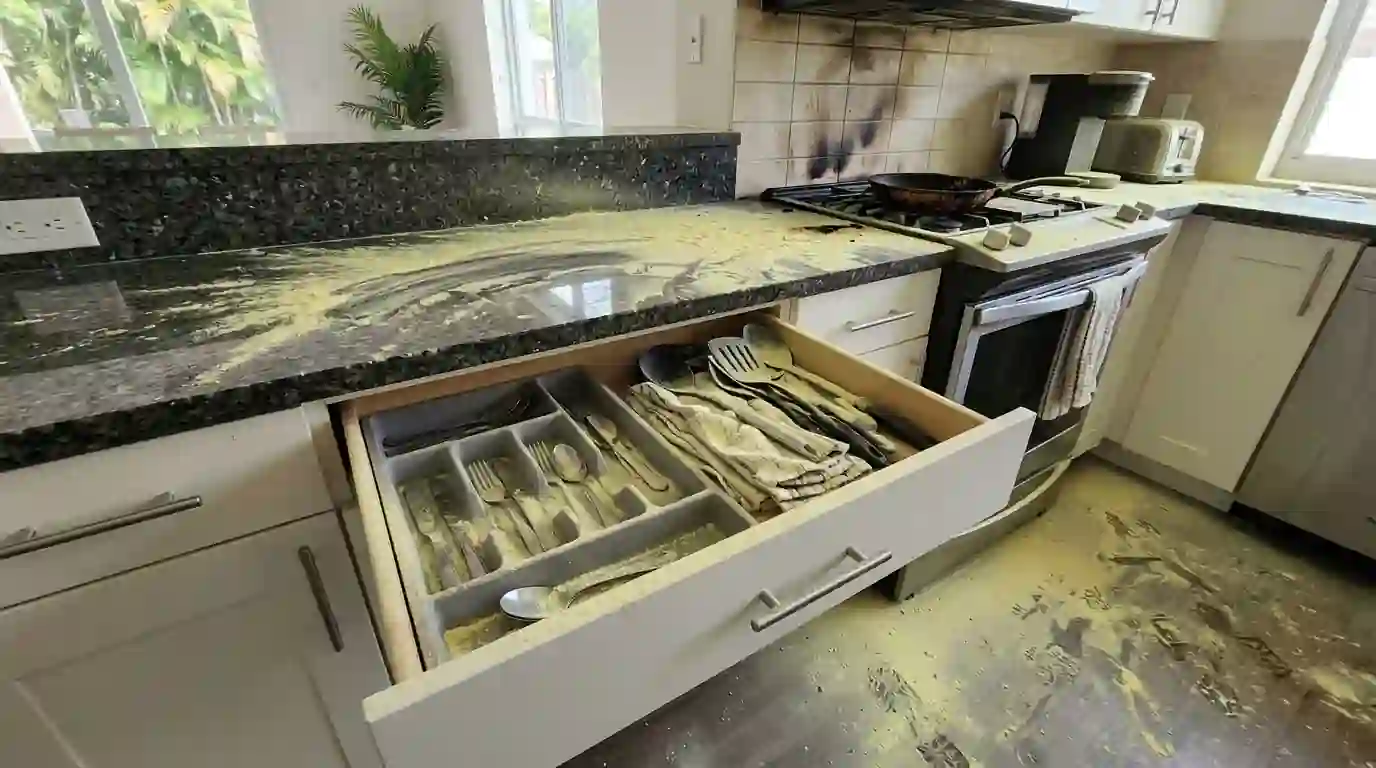
If you used a dry chemical extinguisher, the yellow or white powder needs to come off soon. Many household extinguishers use a powder that turns corrosive as it absorbs moisture, and in a Miami kitchen it starts absorbing moisture right away.
The crew HEPA-vacuums loose powder first, then wipes surfaces with a damp cloth and mild cleaner in small sections. Drawers are emptied, outlet covers removed and the space under the range and fridge checked, because powder collects there and keeps working on metal.
If the fire department used water, the floor and base cabinets become a water job too. Water running behind base cabinets soaks drywall and particleboard bottoms, which swell and grow mold if they are not dried.
Cabinets, counters and appliances: clean or replace
Painted and laminate cabinet faces with light residue usually clean well with degreasers. Blistered doors, particleboard boxes that took heat or water, and anything charred are usually replaced. Matching a few new doors to older cabinets is not always possible, which is worth knowing before you decide.
Granite and quartz counters normally survive with cleaning, though quartz right beside the flames can discolor from heat. Tile backsplashes clean well, but the grout often holds grease and may need regrouting.
Appliances that sat in the smoke without burning, such as the fridge and dishwasher, can usually be cleaned. Have a qualified technician check anything exposed to direct heat or extinguisher powder before using it again. When damage goes past cleaning, our kitchen rebuild crew handles new cabinets, counters and finishes.