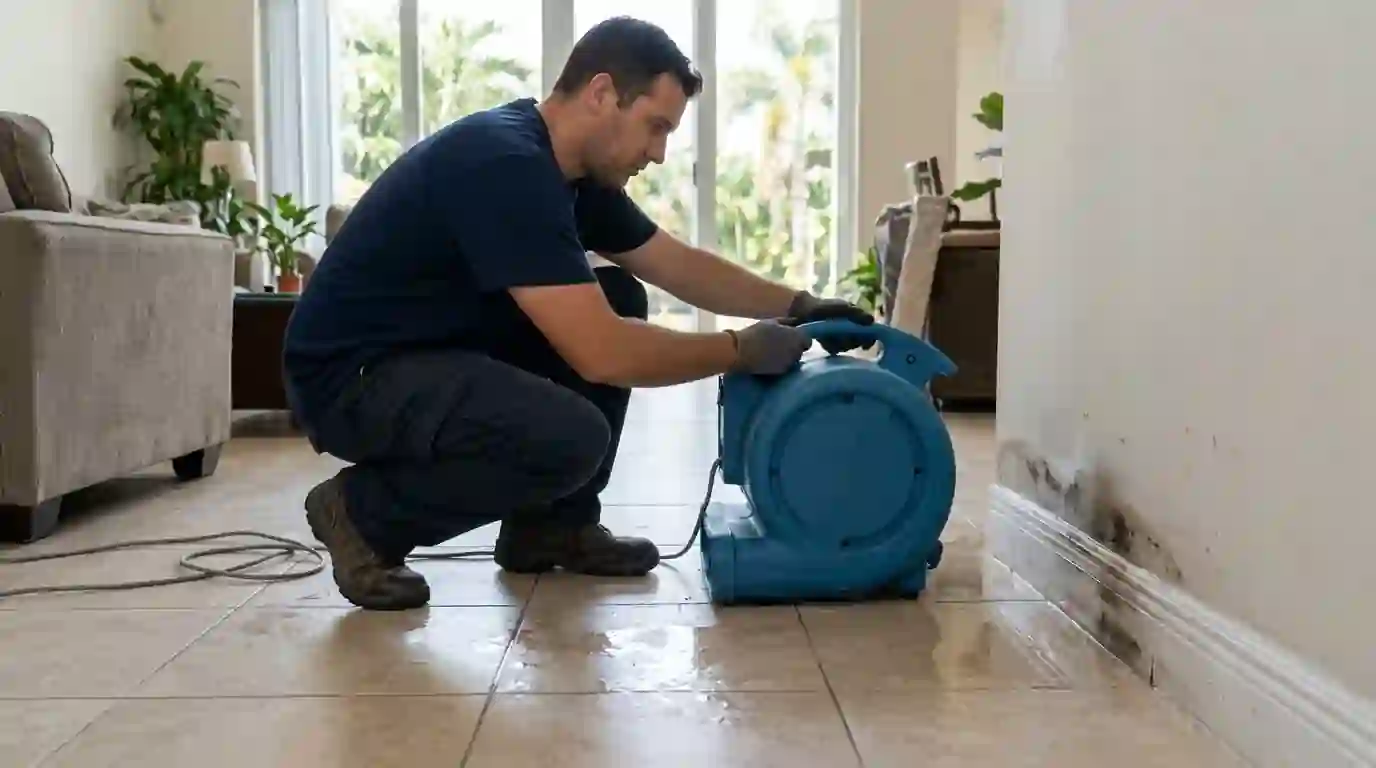
- Stop the water and cut power to wet areas before anything else.
- Photograph every room, the source and the failed part before cleanup starts.
- Wet materials need to be dry within 24 to 48 hours to keep mold from starting.
- Report the loss the same day and keep a written log of every visit.
Most leaks in Miami homes come from ordinary places: a washer hose, a water heater, a toilet supply line, an AC drain that clogged in August. The source matters less in the first day than what you do about it. Water keeps moving after you spot it, wicking up drywall, running under cabinets and soaking into the pad under the carpet.
This checklist walks through the first day hour by hour, the way a crew lead would talk you through it on the phone at two in the morning. You do not have to do all of it yourself, but knowing the order keeps the job smaller and the paperwork cleaner.
Hour one: stop the water and make the rooms safe
Find the source and shut it off. For a supply line, toilet or water heater, that usually means the small valve behind or beside the fixture. If you cannot find it or it will not turn, close the main shutoff, which in many Miami houses sits near the front hose bib or in a box by the meter at the street.
Condo owners often have a shutoff inside the unit near the water heater or in a utility closet. If the leak is coming from a pipe inside a shared wall or from the unit above, call building management or the engineer, who can close a riser or reach the owner upstairs.
If water has reached outlets, a lamp cord or a power strip on the floor, switch off those circuits at the panel before you walk through the room. Never stand in water to reach a breaker. Keep people and pets away from a ceiling that sags or bulges, because drywall holding water can drop all at once.
Hours one to three: take photos before you touch anything
Before you start mopping, walk the whole area with your phone. Take wide shots of every room so the layout is clear, then close shots of the source, the waterline on the walls, wet baseboards, stained ceilings and anything sitting in water. A short video where you say out loud which room you are in helps later, when the adjuster is reading notes from someone else's visit.
Photograph the cause too. A cracked supply hose, a rusted water heater pan or a clogged AC drain is part of the story your claim depends on. Put the broken part in a bag with the date written on it instead of throwing it out, and keep it until your insurer says you can let it go.
Hours two to six: work out what kind of water it is
Restoration crews sort water into three categories under the IICRC S500 approach. Category 1 is clean water, like a broken supply line. Category 2 is gray water, such as washer or dishwasher discharge or AC condensate. Category 3 is black water: sewage, or floodwater that came in from outside.
The category changes what is safe to handle. You can usually mop up clean water yourself. Gray water calls for gloves and quick action, because untreated Category 2 water can turn into Category 3 after about 48 hours. Sewage or outside floodwater is a different job entirely: keep kids and pets out, do not run fans that spread it around, and call a crew that handles sewage backup cleanup.
Hours four to twelve: get bulk water out and start drying
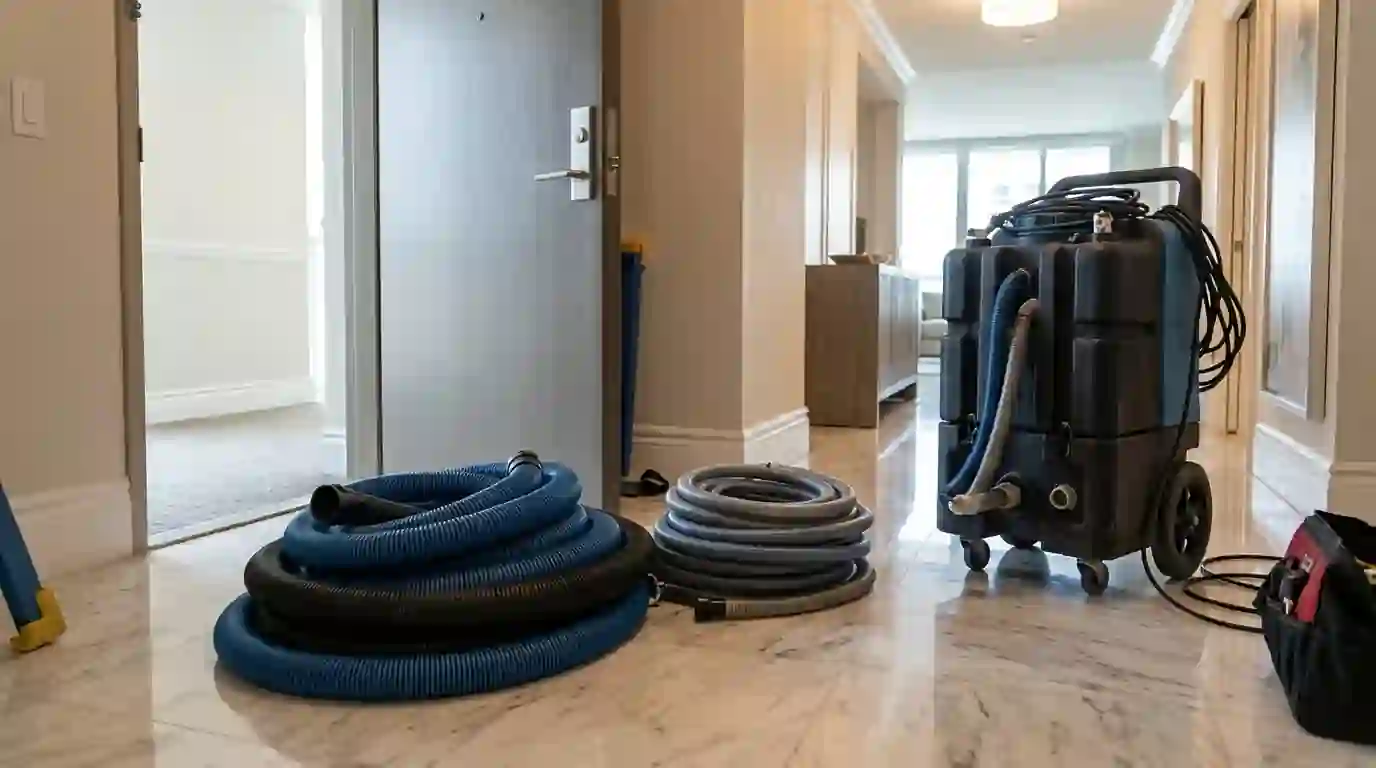
Standing water is the first priority. Towels and a wet vac are fine for a small clean-water spill on tile. Anything bigger, or water that has soaked carpet pad or run under cabinets and walls, needs proper emergency water extraction, because a household vacuum leaves most of the water in the pad and the subfloor.
Lift furniture onto foil squares or wood blocks so the legs do not stain the carpet. Pull rugs, boxes and shoes off wet floors, and carry papers, photos and electronics to a dry room. Open interior doors so air can move. If the water came from a clean source and did not touch the air handler or ducts, keep the AC running, since it pulls moisture out of the air.
Drying is where most of the damage is either stopped or locked in. EPA guidance is to dry damp building materials within 24 to 48 hours to prevent mold, and in Miami's humidity that window is tight, as explained in our piece on how fast mold starts here. Professional structural drying uses air movers, dehumidifiers and daily moisture readings to prove the walls reached a dry goal, not just that the surface feels dry to the touch.
Hours twelve to twenty-four: call your insurer and start a log
Report the loss to your insurance company the same day if you can, and write down the claim number, the name of the person you spoke with and the time of the call. Florida's 2022 property insurance reform requires insurers to acknowledge a claim communication and begin investigating within 7 days, so their clock starts once they hear from you.
Keep a simple log in a notebook or on your phone: when the leak started, when you shut it off, who came to the house and what they did. Save receipts for anything you buy, from fans and towels to a hotel night. For policies issued on or after January 1, 2023, Florida law no longer allows post-loss benefits to be assigned to a contractor, so do not sign any paper that claims to hand your claim over to a company. A good crew documents the job for you and leaves the claim in your name.
Day-one mistakes that make the job bigger
Most of the expensive problems a crew walks into started with a reasonable guess in the first few hours. These are the ones to skip:
- Painting over a stain or patching a ceiling before the cavity behind it is dry.
- Running a carpet shampooer on carpet that sat in gray or black water.
- Pointing one box fan at a wet wall and calling it done the next morning.
- Throwing away the failed hose, valve or part before anyone photographs it.
- Shutting the house up and turning the AC off while you stay somewhere else, which lets indoor humidity climb.
- Pulling up wood or laminate flooring in a panic before anyone has measured how far the water went.
Common questions
Should I pull up wet carpet myself on the first night?
You can peel back a corner to check the pad, but hold off on cutting or hauling it out until it has been photographed and measured. Pad that sat in clean water is usually replaced, while the carpet itself can sometimes be dried in place. Carpet and pad that took gray or black water are normally removed, and that is easier to support with an adjuster when it is documented first.
Is it safe to sleep in the house the night of a leak?
Usually, if the water was clean, power to the wet rooms is off and no ceilings are sagging. Sewage, outside floodwater, a smell of gas or burning plastic, or a ceiling that has already come down are reasons to stay elsewhere until a crew has looked at it. Keep the receipt if you book a room.
How can I tell if water is still leaking somewhere I cannot see?
Turn off every fixture and watch the water meter for a few minutes; if the dial still moves, there is a leak in the line. Swollen baseboards, a floor that feels soft or a stain that keeps growing are other clues. Crews use moisture meters and thermal cameras during hidden moisture detection to map how far the water traveled inside walls and under floors.