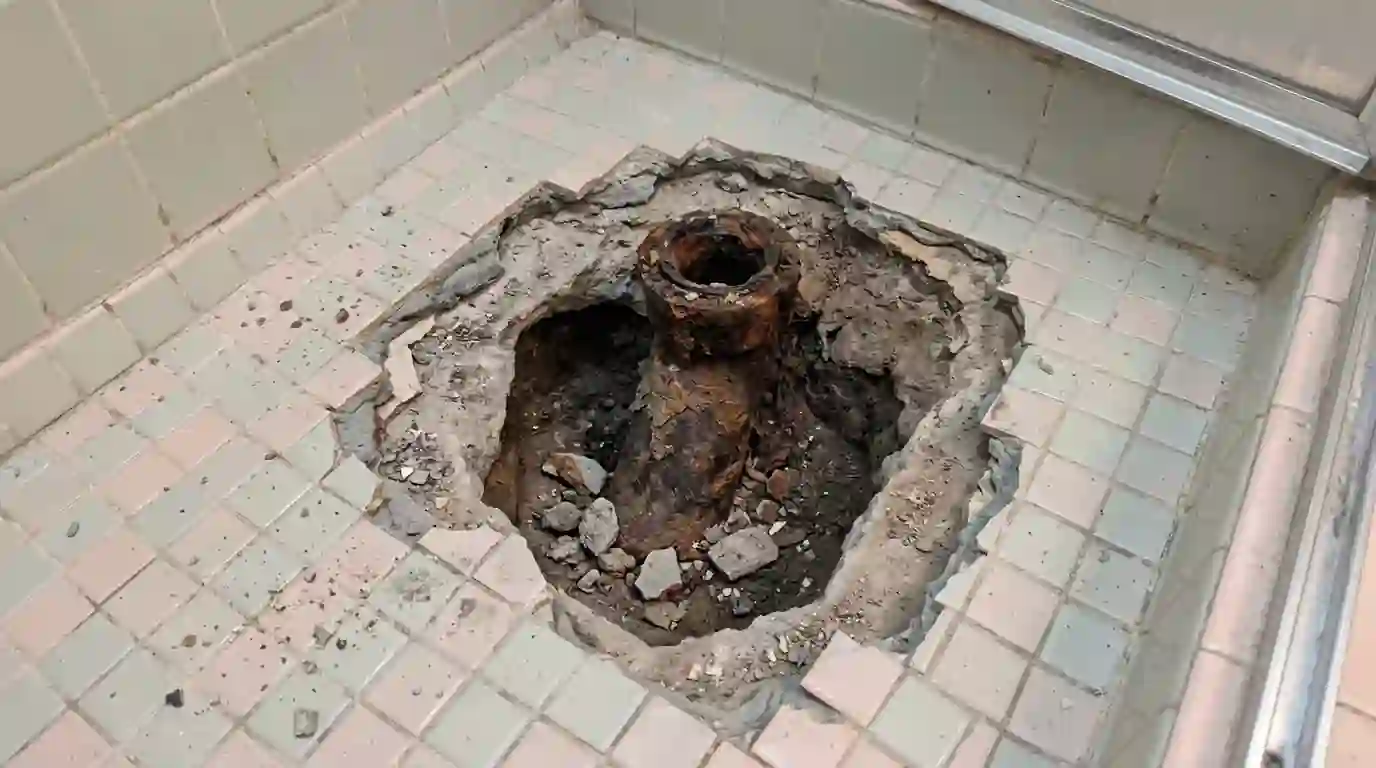
- Cast-iron drains in older South Florida homes, commonly those built before about 1974, often fail from the bottom of the pipe.
- Scale inside the pipe narrows it, so clogs and slow drains become frequent.
- Pinhole leaks can wash out the soil under the pipe and slab.
- A sewage backup is Category 3 water and calls for removal and disinfection, not just drying.
Miami-Dade has a large stock of older homes. FIU's Metropolitan Center reported in 2018 that about 70% of the county's housing supply was built before 1990 and 36.6% was 50 or more years old. Plenty of those homes, from mid-century ranch houses to older duplexes, have cast-iron waste lines under the floor.
Cast iron was a solid choice when it went in. Decades later, the pipe is often thinner, rougher and narrower inside than anyone realizes, until a tub drains slowly, a floor smells like sewer, or wastewater comes up through a shower drain.
How cast iron wears out
Cast-iron wastewater pipes in older South Florida homes, commonly those built before about 1974, tend to fail in a predictable way. The bottom of the pipe, where water and waste sit and flow most often, thins over the years and develops pinholes. Inside, rust and scale build up on the walls, narrowing the opening and catching paper and debris.
Once a pipe starts leaking under the slab, the water washes away some of the soil that supports it. The pipe can sag or crack where it loses support, and the leak gets worse. Because all of this happens under concrete, homeowners usually notice the symptoms long before anyone sees the pipe.
Signs your drains may be failing
No single sign proves a cast-iron problem, but several together are worth a plumber's camera inspection:
- Several fixtures draining slowly at once, especially on the same side of the house.
- Gurgling from a toilet or tub when another fixture drains.
- Clogs that come back within weeks of being snaked.
- A sewer smell near baseboards, floor drains or under a vanity with no obvious source.
- Damp or warm spots in the floor, loose tiles or cracks along a line in the slab.
- Water or waste coming up through the lowest drain in the house, often a shower or tub.
Why backups hit the lowest drain first
Wastewater always takes the path of least resistance. When a main line is blocked by scale, roots or a collapsed section, the water coming from upstream fixtures has to go somewhere. It rises out of the lowest opening, which in most single-story Miami homes is a shower drain, a tub or a ground-floor toilet.
Heavy rain can make it worse. During long rainy stretches the ground around older lines is saturated, and in some neighborhoods the public system is also under strain. A partly blocked line that copes on a dry day can back up on a wet one.
If sewage is coming up, stop using every fixture in the house. Do not run the washer or dishwasher, and do not flush toilets, until the line is cleared. Every gallon you send down adds to what is on the floor.
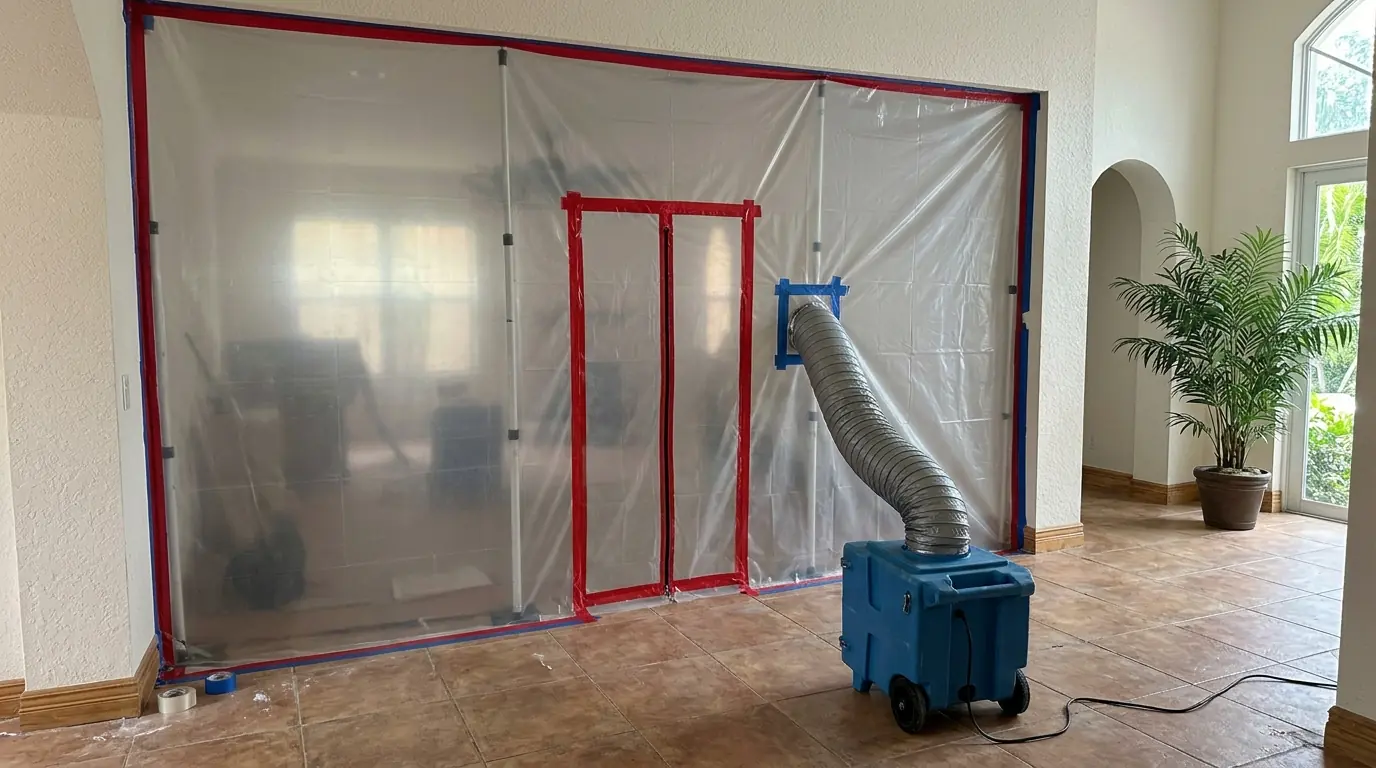
Cleaning up a sewage backup safely
Under IICRC S500 guidelines, sewage is Category 3, or black, water. It carries bacteria and other contaminants and is not something to mop up with household cleaners. Keep children, pets and anyone with a weak immune system out of the area, and avoid walking through it.
Proper sewage backup cleanup removes the contaminated water, then removes porous materials it touched, such as carpet, pad, baseboards and the lower part of drywall, before cleaning and disinfecting what remains and drying the structure. That is different from a clean-water leak, where many materials can be dried in place. If drywall comes out, the crew will usually make a flood cut at a consistent height.
Odor often lingers after a backup, especially in grout, subfloors and wall cavities. Odor removal treats it at the source once the contaminated materials are gone and surfaces have been disinfected.
Slab leaks and hidden damage
Not every failing cast-iron line causes a dramatic backup. Some just leak slowly under the floor for months. The signs are subtle: tile that sounds hollow, wood flooring that cups, baseboards that swell, or a faint musty smell along one wall.
Water from a slab leak can travel under flooring and wick into walls far from the leak itself. Hidden moisture detection uses moisture meters and thermal imaging to map how far it spread before any flooring is lifted. Drying a slab and the walls around it is slower than drying a ceiling, because concrete holds water. Our slab leak water damage page covers that work.
Repair choices to discuss with your plumber
Once a camera inspection shows the pipe's condition, a licensed plumber can explain the options. Depending on what they find, that may mean replacing a short damaged section, lining the existing pipe from the inside, or replacing the line with PVC, which can involve cutting trenches through the slab or tunneling under it. Each approach has different costs, timelines and effects on the floors above.
Ask for a copy of the camera video. If you plan to file an insurance claim for resulting water damage, the video and the plumber's written findings help explain what failed and when. Keep them with your photos of the damage.
Common questions
How can I tell if my house has cast-iron drains?
Look at exposed drain pipes in the garage, laundry area or under sinks: cast iron is dark, heavy and often rusty, while PVC is white or gray plastic. Many homes have a mix, because earlier repairs replaced some sections. A plumber's camera inspection shows what runs under the slab.
Will chemical drain cleaners help with slow cast-iron drains?
They are a poor fit for old cast iron. Harsh chemicals can sit in low spots of a scaled pipe and speed up corrosion, and they do not remove the scale that is causing the slowdown. A plumber's mechanical cleaning or descaling, followed by a camera inspection, tells you more.
Is a sewer smell in the bathroom always a broken pipe?
Not always. A dry trap in a rarely used shower or floor drain can let sewer gas into the room; running water for a minute refills it. A loose toilet seal is another common cause. If the smell continues after those are checked, a camera inspection of the drain line is the next step.