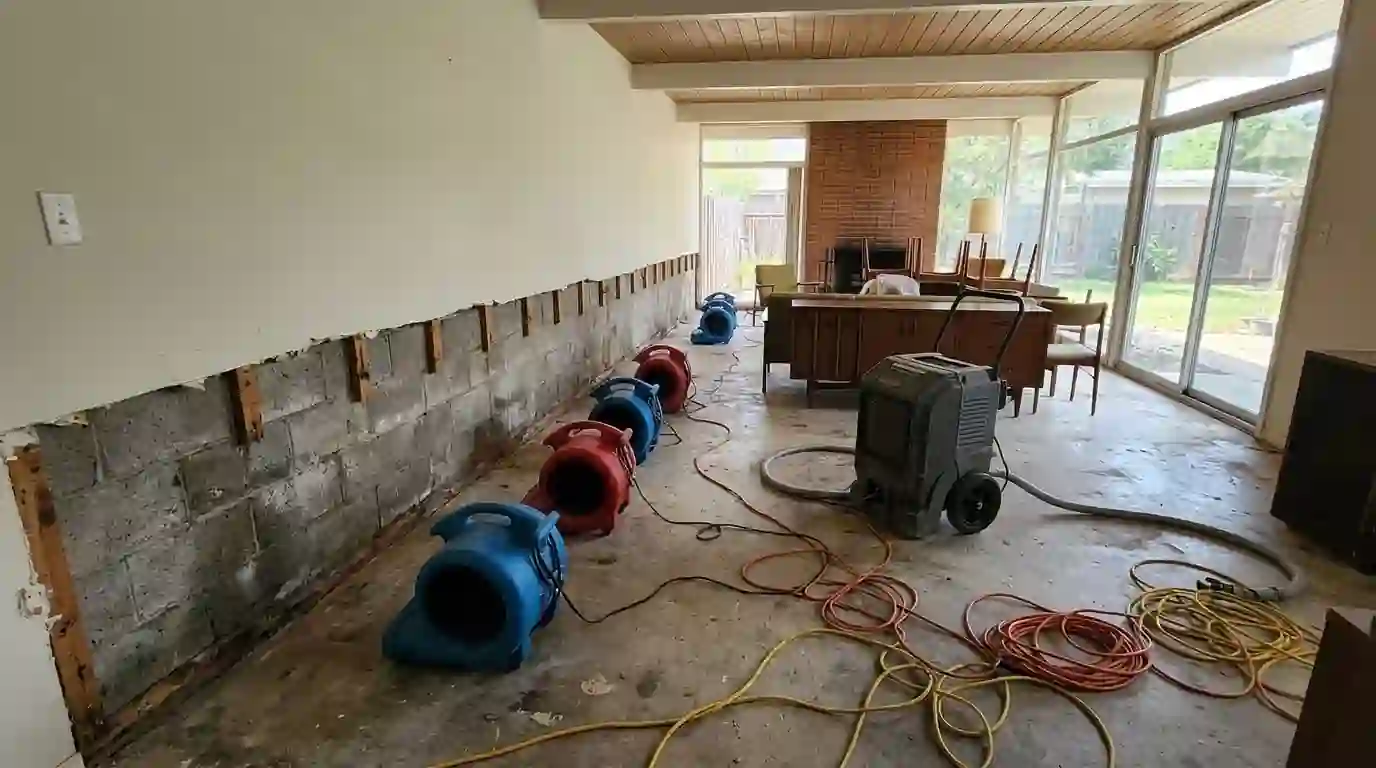
If floodwater is inside your Hialeah home, call (786) 664-2643 any time. The crew extracts standing water, removes wet drywall, baseboards and pad the floodwater touched, cleans and treats the surfaces, then dries the block walls and slab with dehumidifiers and air movers until readings reach dry goal. Photos and logs are kept for your adjuster.
The city's own flood-hazard page says it plainly: when canals back up, stormwater has no place to drain. Hurricane Irene in 1999 and the October 2000 No-Name Storm both caused widespread flooding here, and in November 2020 Tropical Storm Eta pushed water into homes so fast that one family was bailing with buckets after it came in around 6 a.m.
Most Hialeah houses are mid-century concrete block, and block handles water well. What does not handle it is the drywall, baseboards, kitchen cabinets and flooring inside. New Kingston crews get the water out, dry the block and slab properly and put the rooms back together.
Block homes, duplexes and small apartment buildings
Hialeah runs on its own street grid, separate from the county's, with dense blocks of mid-century homes, duplexes and small apartment buildings and newer townhomes toward the west. When water comes in, it often reaches more than one household at once, especially in duplexes that share a wall and a slab.
More residents rent than own (Data USA puts the homeownership rate at 46.6%), so the tenant is often on site while the owner is on the phone. We photograph both sides of a shared wall and keep moisture logs by unit, so each person ends up with a clear record.
Why drying a flooded block house takes patience
Concrete block and slab hold water for days after the floor looks dry, and a high water table means the slab is drying against damp ground. Rushing the rebuild over a wet slab is how mold and lifting tile show up a month later.
Emergency water extraction pulls out the standing water first. Then structural drying runs dehumidifiers and air movers with daily readings, and the walls stay open until the numbers say the block is dry.
Flood cuts: what stays and what goes
Rising floodwater counts as Category 3 under the IICRC S500 standard because it carries whatever was in the street and the canal. Carpet, pad, the bottom of the drywall and wet insulation come out. Tile, block and solid wood framing can usually be cleaned, treated and dried in place.
The cut runs a set distance above the highest waterline so new board joins at a clean, straight seam. After drying, our drywall replacement crew hangs and finishes new board, replaces baseboards and resets flooring, so one crew sees the job from the first call to the last coat of paint.