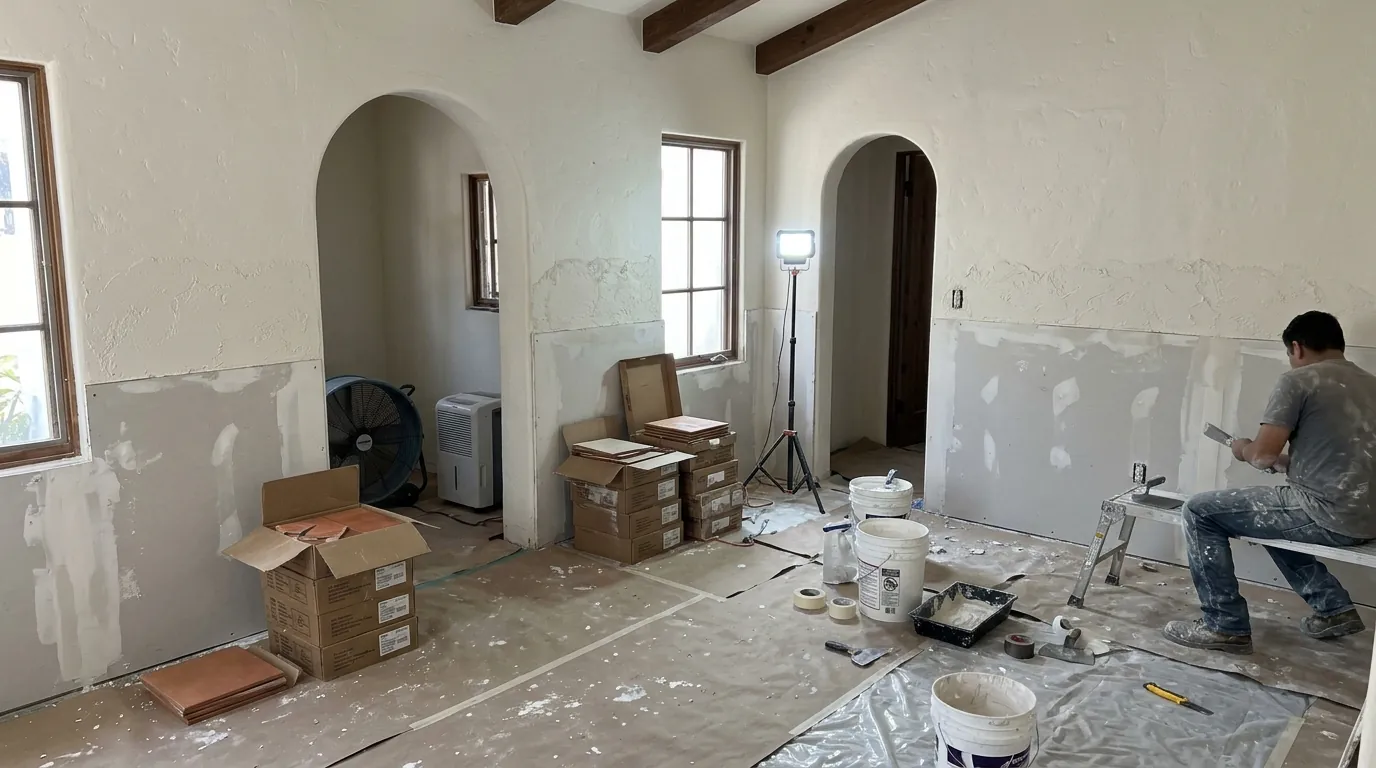
Flood restoration in a Davie home runs in two stages. First the crew removes water and soaked materials, then cleans the framing and runs drying equipment that follows the IICRC S500 standard, confirming progress with daily readings. Then the rebuild starts: new drywall, flooring, trim and cabinets, finished to match what was there. One crew keeps the job moving from start to finish.
Davie was settled in 1909 and named for Robert Parsell Davie, and it still keeps its ranches, Western-style buildings and horse trails. That mix of open land, lakes and older homes shapes how water moves here and how a flooded house gets rebuilt.
Crews drive up from Miami, about 24 miles south, and work across the town from the I-595 side down to Griffin Road and out toward I-75. We handle the job from water removal through the last coat of paint.
Forest Ridge and the new flood maps
Recent FEMA flood map updates mean many Forest Ridge homeowners must now carry flood insurance. These are mostly 1980s and 1990s Mediterranean homes on the lakes, often with tile floors over a slab and tall drywall walls.
If your home was just mapped into a higher-risk zone, it helps to know that FEMA says most homeowners policies do not cover flood, and new NFIP policies typically take 30 days to start. Plan coverage before the season, not after a forecast.
Ranches, Mission homes and acre lots
The median Davie home was built in 1988, but the town is not one kind of house. Arrowhead has 1970s and 1980s ranches. Hawke's Bluff has late-1980s to early-1990s Spanish and Mission homes. Flamingo Groves and Martha Bright Farms sit on near-acre equestrian lots, and condos cluster on the east side.
On the big rural lots, water can pond across a yard and reach the house from more than one side. Detached barns, workshops and guest quarters may flood too. During Tropical Storm Eta in November 2020, firefighters rescued goats from a flooded Davie farm, which gives a sense of how deep water can collect out here.
From dry structure to finished room
Once readings show the framing and slab are dry, reconstruction begins. Doing the rebuild with the same crew that did the drying means nobody has to guess what was removed or why.
Matching matters in homes with Spanish or Mission details: arched openings, textured walls and tile that may be hard to find. The crew notes finishes before tear-out so the rebuild can come close. Our restoration costs page explains what drives the price of a rebuild.
- Drywall hung, taped and textured to match the rest of the room
- Baseboard, casing and doors replaced or refinished
- Tile, vinyl plank, laminate or wood floors installed
- Lower cabinets and vanities rebuilt where they swelled
- Stain-blocking primer and paint to finish