For water, fire or mold damage in North Miami Beach, call (786) 664-2643 any hour. The crew finds and dries wet materials, cleans smoke and soot residue, contains and removes mold, and rebuilds what came out. Mold testing and clearance are done by an independent licensed assessor you hire. Each unit gets its own photos and logs.
Each of those housing types brings its own trouble. The older high-rises carry aging plumbing, risers and electrical systems. The garden apartments and single-family homes inland deal with leaks, AC closets and the kind of humidity that turns a small drip into mold. Waterfront blocks along the Intracoastal and the Oleta River take tidal and surge flooding.
The city saw how serious aging buildings can get in July 2021, days after the Surfside collapse, when it closed the 156-unit Crestview Towers at 2025 NE 164th Street over unsafe structural and electrical conditions. The building was out of compliance with its 40-year recertification and had reported millions of dollars in Hurricane Irma damage.
Older condo towers: risers, balconies and recertification
Florida's milestone inspection law covers condo buildings three stories and up at 30 years and every 10 years after, and Miami-Dade can require the first one at 25 years for condo buildings within 3 miles of the coast. A licensed engineer or architect does the inspection. Repairs that follow often open walls and ceilings where years of slow leaks have been hiding.
When a riser, balcony or window leak soaks a unit, our condo leak restoration crew dries it and keeps separate notes for the owner and the association. That record helps when the question is whether the water came from a common element or a fixture inside the unit.
Electrical and kitchen fires in older buildings
An outlet, a panel or old wiring in a mid-century building can start a fire that never leaves one room yet still fills the unit with smoke, and the water used to put it out turns into a second job. Electrical fire damage repair begins once an electrician makes the system safe: burned material comes out, soot is cleaned, wet areas are dried and the room is rebuilt.
Smoke slips through hallways, shared ducts and the gaps around pipes, so neighboring units may need cleaning too. Residue is removed at the source and odor is treated, never just covered with fragrance.
Mold in garden apartments and AC closets
Inland, the same pattern repeats: a clogged condensate line, a slow leak under a sink or a shower pan weeping into the wall. In South Florida humidity, wet drywall can begin growing mold within a day or two, which is why EPA guidance is to dry wet materials within 24 to 48 hours.
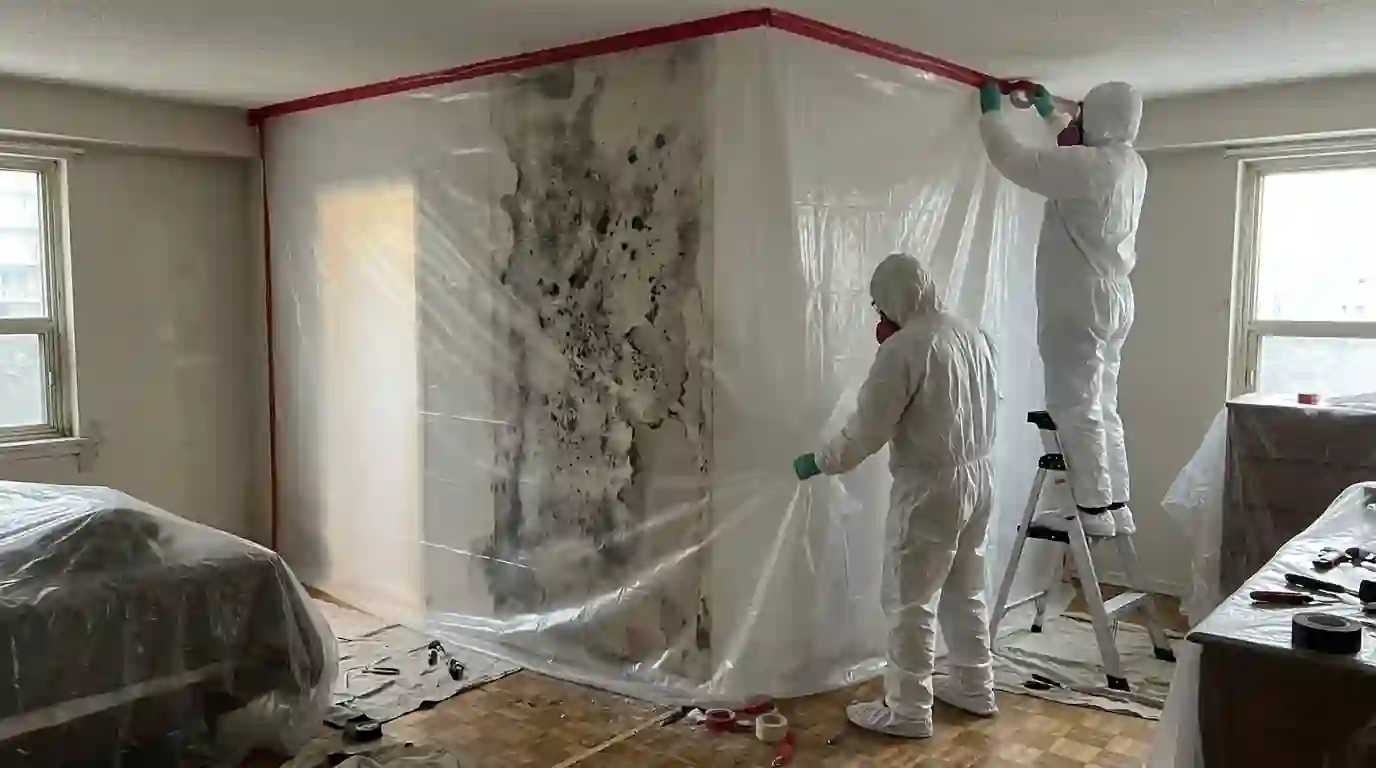
Mold remediation includes containment, air filtration, removal of affected material and drying, with the moisture source fixed first. As Florida law requires, an independent licensed mold assessor handles any testing and clearance, never the company doing the removal.