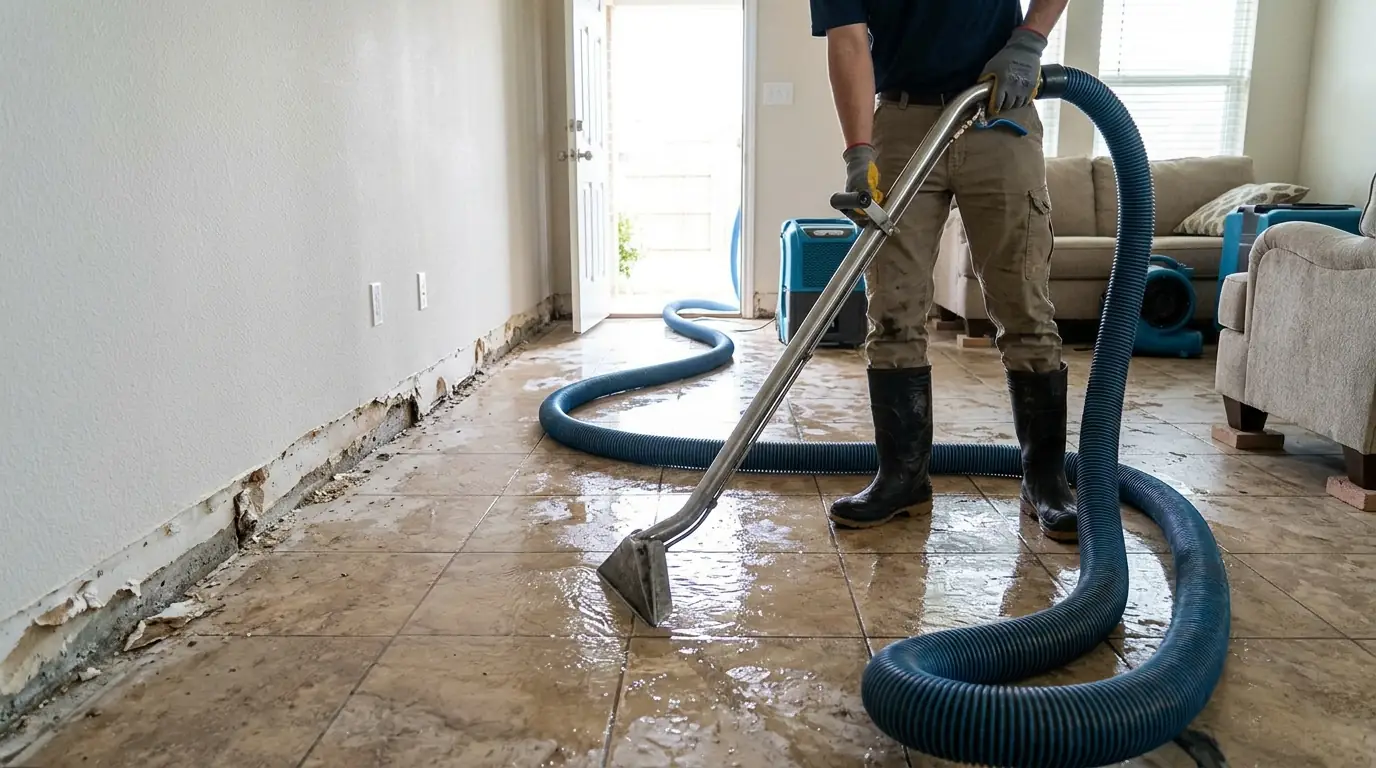
If water gets into a Cutler Bay home, keep children and pets out of it, switch off power to wet rooms if you can reach the panel safely, and photograph the waterline. Extraction comes first, then flood cuts, drying with daily moisture readings, and rebuild of drywall, flooring and cabinets. One crew carries the job from first pump to final paint.
Cutler Bay runs from SW 184th Street (Eureka Drive) south to SW 232nd Street, and east from US-1 and the Turnpike to Biscayne Bay. Its bayside neighborhoods sit low and drain slowly. After that June 2022 flood, the mayor said the water simply had nowhere to go.
The town's history shapes its houses. Hurricane Andrew made landfall near Cutler Ridge in 1992 and left the area in near-total destruction, so much of the housing in places like Saga Bay, along with many townhomes and condos, was rebuilt in the years after. That rebuild is now more than 30 years old.
When the street water will not drain away
Slow drainage means water can sit against a house for a day or more. Even a few inches over the threshold soaks baseboard, the bottom of the drywall and any carpet or laminate. Water that came in from the street is Category 3, so porous materials it touched are removed instead of dried.
Emergency water extraction uses truck-mounted and portable units to pull water from floors and carpet before it wicks higher. The sooner the standing water leaves, the lower the flood cut can be.
Flood cuts, and why they make the rebuild easier
A flood cut is a straight, level line through the drywall above the highest wet point, often set so it lines up with standard sheet widths. Below that line, drywall, insulation and baseboard come out so the framing can dry and be treated.
Clean, level cuts speed up the rebuild, because new board goes in as full strips. Once readings hit the drying goal, the crew hangs and finishes the board, primes and paints, and resets baseboard. Drywall replacement and flooring replacement run as part of the same project.