
Skip to content
Water, fire, storm and mold calls answered 24/7 across Miami-Dade and Broward(786) 664-2643
New KingstonWater & Restoration · Miami(786) 664-2643Answered 24/7
Ceilings, attics and walls

Roof leak water damage repair in Miami

A brown ring on the ceiling grows every time it rains, or a drip started at the light fixture, and you have no idea how long water has been sitting above the drywall.

Technician cutting out a water-stained section of ceiling drywall below a roof leak in a Miami living room, ladder and drop cloth
Quick answer

Roof leak water damage repair covers everything inside the house the leak soaked: attic insulation, ceiling drywall, walls and the flooring below. The crew maps the wet area with meters and thermal imaging, removes wet insulation and sagging drywall, dries the framing and rebuilds the ceiling once a roofer fixes the leak. A tarp can keep rain out until then.

Roof leaks rarely show up where they start. Water gets past a cracked tile, worn flashing or aging underlayment, runs along the decking or a truss, soaks the insulation and finally stains the ceiling several feet away. By the time it shows, the wet area above is usually bigger than the stain.

We dry and repair the inside of the house: attic insulation, ceiling drywall, walls, trim and the floor under the drip. The roof itself needs a roofer. New Kingston can tarp it in the meantime, and our moisture readings help the roofer narrow down where the water gets in.
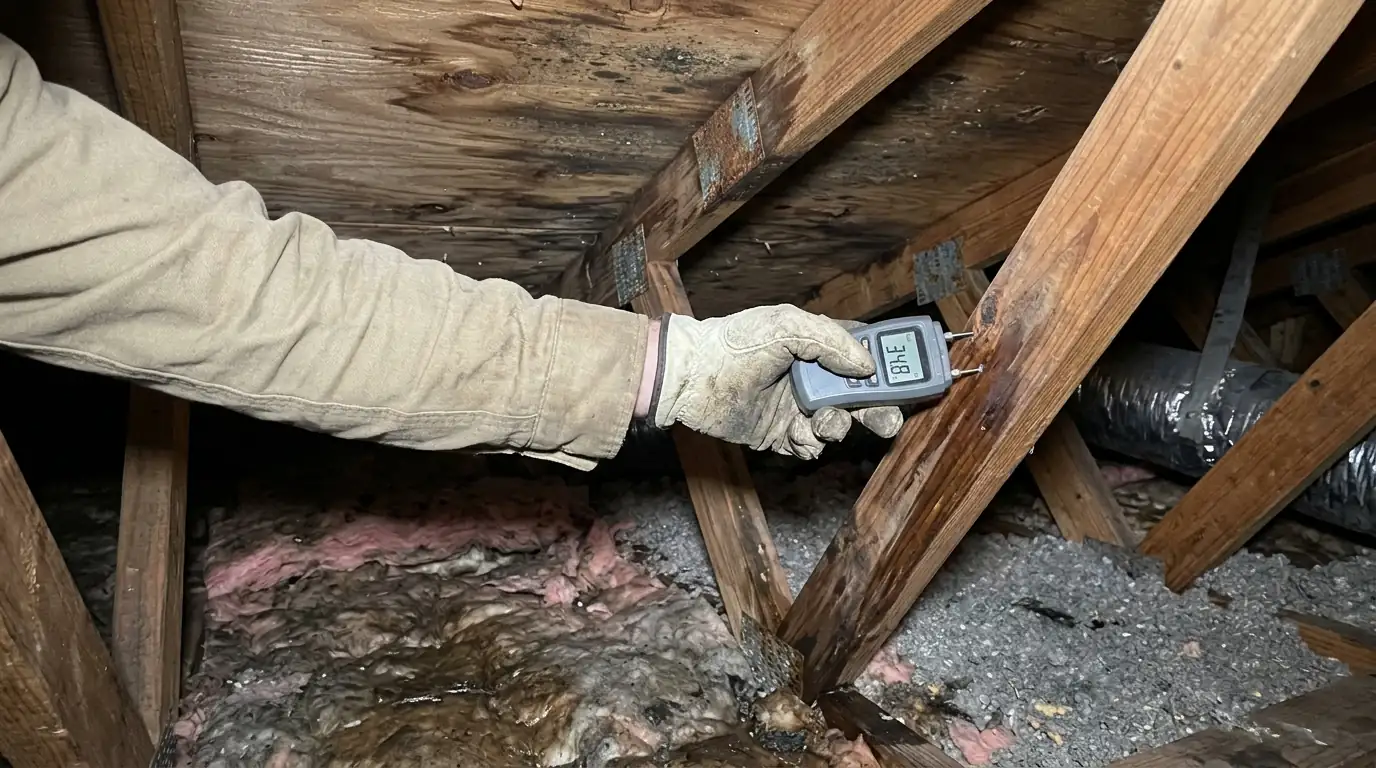
Wet, flattened attic insulation beneath stained roof decking in a Miami home, moisture meter held against a truss

Is it the roof or the AC?

In Miami, a ceiling stain can come from the roof or from the air handler. Algae can clog AC condensate pans and drain lines, and when the pan overflows, water lands on the ceiling under the unit, often in a hallway or closet. That leak shows up on dry days, while a roof leak tracks the rain.

Stains near the air handler, a return vent or a duct run point to AC leak water damage. Stains that appear after storms, near exterior walls or under valleys and roof penetrations point to the roof. Moisture readings and an attic check help sort it out.

Why slow roof leaks do more damage than you see

A slow leak may wet the same spot several times a week through the rainy season, which Miami-Dade lists as May 15 through October 15. Each time, the insulation stays damp a little longer, and in summer humidity it may never fully dry between storms.

That steady moisture leads to sagging drywall, rusted nail heads popping through the ceiling, softened decking and mold on the attic side of the ceiling. EPA recommends drying wet materials within 24 to 48 hours, which a repeating leak never allows.

If you see dark spots on the attic side or the ceiling smells, mention it when you call. Our attic mold removal work can follow once the leak is stopped.

Signs to act on

When to call about roof leak water damage

  • A ring that grows after rainA stain that spreads with each storm means water reaches the drywall every time.
  • Drips at a light or ceiling fanWater follows wiring to fixture boxes, so switch that circuit off.
  • Peeling paint near the ceiling lineWater running down inside the wall lifts paint at the top first.
  • Damp, matted attic insulationInsulation that feels wet or looks flattened sits right under the leak.
  • Musty room after stormsA smell that comes and goes with the rain points to a slow, hidden leak.
  • Dark streaks on trusses or deckingStained wood in the attic traces the water's path down from the roof.

Drying ceilings and attics together

Wet insulation comes out first, since it holds water and keeps the drywall soaked. Ceiling drywall that sags, crumbles or reads high is cut out in clean sections, while drywall that is only damp and still firm can often be dried in place.

The attic and the room are dried at the same time, with air movers, dehumidifiers and readings on the framing and decking. Then the ceiling is rebuilt with new drywall, matched texture and stain-blocking paint so the old ring does not bleed back through.

Flat roofs, tile roofs and top-floor condos

Flat and low-slope roofs on additions, porches and older homes hold standing water, and a small tear in the membrane can leak for months. Tile roofs shed water well, but the underlayment beneath the tiles does the waterproofing, and as it ages, leaks appear around valleys, walls and vents.

On a top-floor condo, the roof belongs to the association, so tell the building manager when water comes through. We document the damage inside the unit for both you and the association.

How the job runs

From your call to a finished room

  1. Tell us when it leaksLeaks that follow the rain suggest the roof; leaks on dry days suggest the AC or plumbing.
  2. Map the moistureMeters and thermal imaging show how far the water spread through the ceiling and walls.
  3. Protect the roofIf the roofer cannot come right away, we put an emergency tarp over the suspected area.
  4. Remove wet insulation and drywallSoaked insulation and sagging ceiling sections come out, with photos for your records.
  5. Dry the attic and the roomAir movers and dehumidifiers run until decking, framing and walls reach dry goal.
  6. Rebuild the ceilingNew drywall, texture and paint go up after the roofer confirms the leak is fixed.

Questions

Roof Leak Water Damage questions

Can I just paint over a roof leak stain?

Not until the leak is fixed and the drywall is dry. Paint over a wet ceiling bubbles and peels, and water stains bleed through ordinary paint. Once it is dry, a stain-blocking primer keeps the ring from coming back.

How do I know if ceiling drywall needs replacing?

Press gently near the stain. If it feels soft, sags or crumbles, it should come out. Firm drywall with only a stain can often be dried and sealed, and a moisture meter gives the real answer.

My ceiling is bulging with water. What should I do?

Move furniture away and put a bucket under the lowest point of the bulge. A small hole at that point lets the water drain in a controlled way instead of the ceiling dropping. Turn off any light or fan circuit in that area.

Will the roofer fix the water damage inside too?

Roofers typically fix the roof and stop there. The wet insulation, ceiling, walls and floors are restoration work, which is what we do. We work in sequence with your roofer so the interior is rebuilt after the leak is fixed.

Why does the roof leak only show up in some storms?

Wind direction changes where rain hits the roof. Worn flashing or a cracked tile on one side may only leak when storms come from that direction, or when rain is heavy enough to back up in a valley. Note the dates and wind when it leaks; that helps the roofer find it.

Water, smoke or storm damage right now?

Call (786) 664-2643. A person answers at any hour, asks what happened, and tells you what to do while the crew gets moving.

Call (786) 664-2643 · 24/7