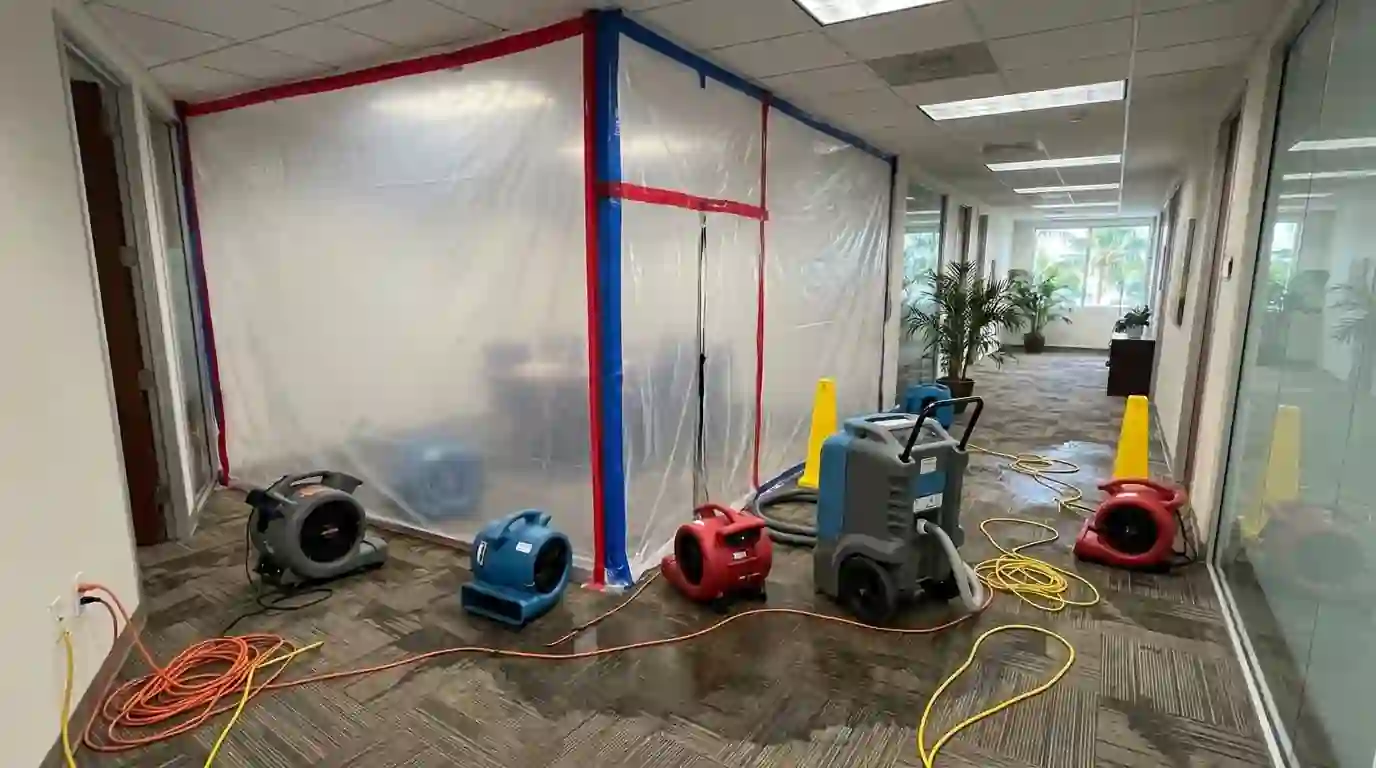
Commercial restoration follows the same drying and cleaning standards as homes, adjusted for scale and occupancy. The crew isolates affected areas, extracts water, sets drying equipment, logs daily readings and documents everything for the owner, manager and insurers. Work can be phased by zone or scheduled after hours so offices, shops and condo residents keep access to unaffected areas.
Commercial losses come with more people involved. A property manager, a tenant, an association board, a building engineer and sometimes several insurers all need answers, and the work has to fit around customers, residents and lease terms.
New Kingston handles water, storm and fire work in offices, retail spaces, restaurant dining rooms and condo common elements such as lobbies, corridors, stairwells and amenity rooms. The crew plans the work in zones so the dry parts of the building keep running.
Keeping the rest of the building open
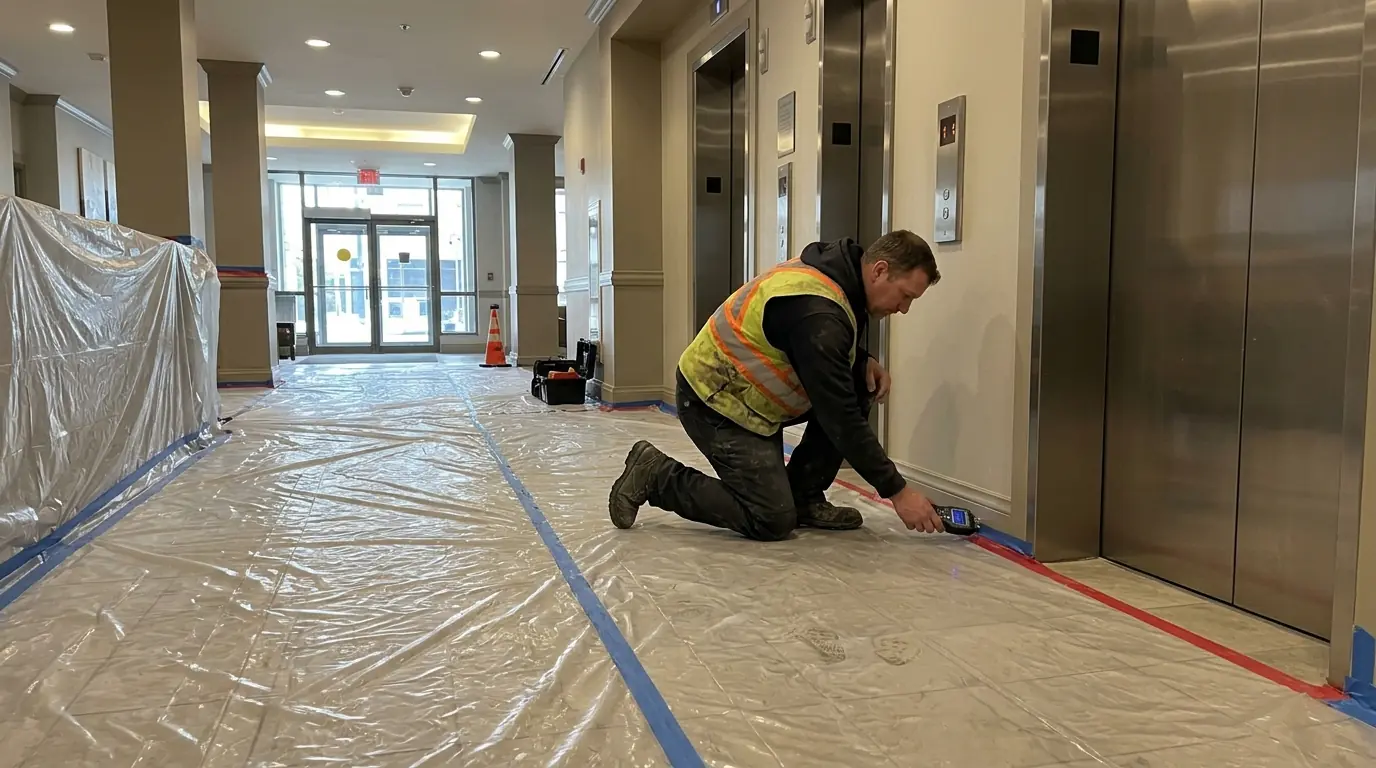
The first job in a commercial loss is drawing a line around what is wet. Plastic containment walls, zip doors and floor protection separate work zones from occupied space, so a law office can keep seeing clients on one side of the floor while the other dries.
Equipment placement is planned for noise and walkways. Air movers and dehumidifiers run around the clock during drying, so loud units go where nobody is working, cords are taped down, and exit routes stay clear.
Condo common areas and the association's side
In a condo building, the declaration and bylaws decide where a unit ends and the common elements begin. Lobbies, corridors, stairwells, elevator landings and often the pipes inside shared walls belong to the association, while finishes inside a unit usually belong to the owner.
The crew works with the property manager on access, elevator protection and resident notices, and documents common areas separately from units so each party has its own record. When a single pipe failure touches both, the condo leak restoration page explains the unit side.
Older condo towers may also be in the middle of milestone inspections or recertification. Under Florida's SB 4-D, condo buildings three or more habitable stories need a milestone inspection by December 31 of the year they turn 30, and every 10 years after.
Retail, restaurants and inventory
For a shop or restaurant, every closed day costs sales. The crew moves stock off wet floors first, separates items that can be cleaned from those that cannot, and photographs damaged inventory for the owner's records. Ruined stock stays on site, in place and photographed, until the owner or insurer releases it.
Restaurant front-of-house areas often have tile on slab, booth seating and drop ceilings. Wet ceiling tiles come down and get replaced, booths and upholstery are cleaned or set aside, and the slab is dried before flooring is reset, timed around health inspection needs.