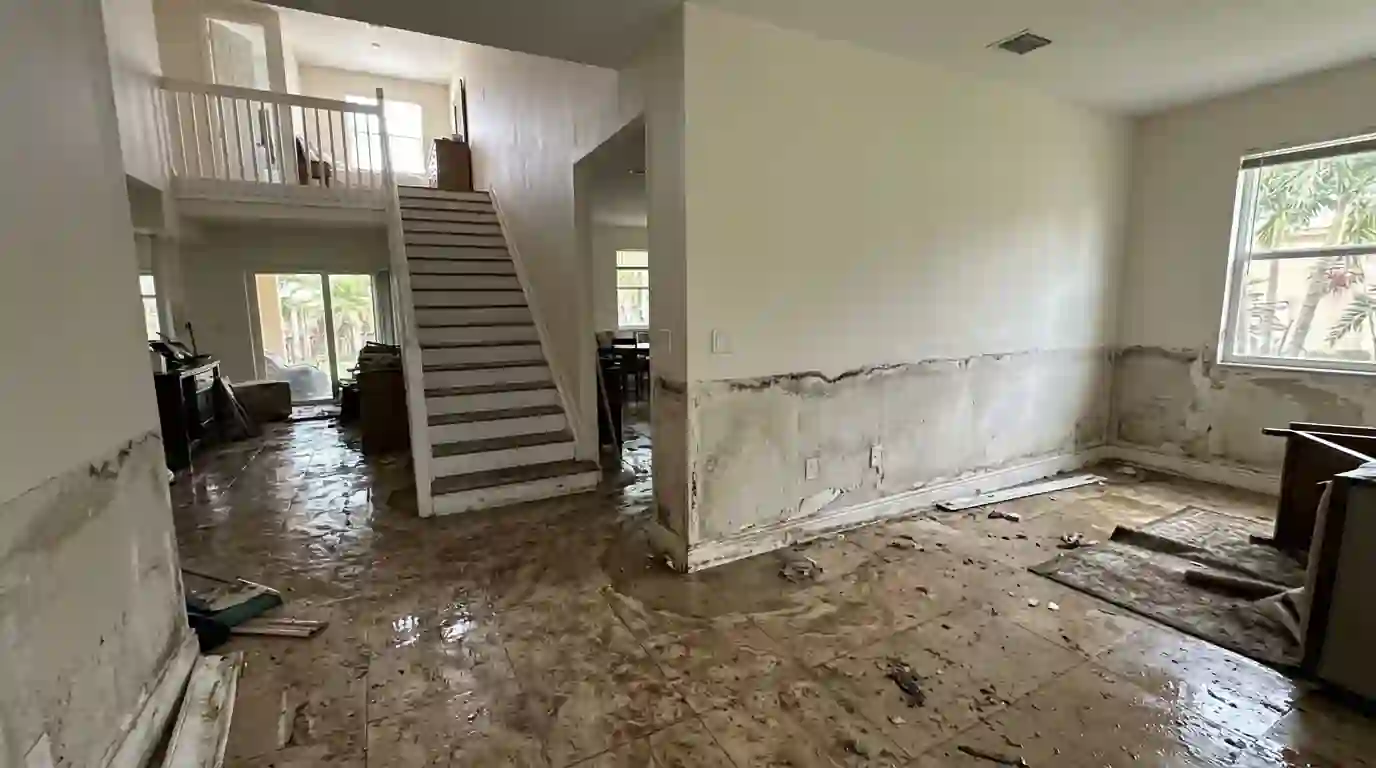
- Policies generally sort water losses by source: inside the home versus rising water from outside.
- FEMA says most homeowners and renters policies do not cover flood damage.
- NFIP flood policies typically have a 30-day waiting period before they take effect.
- Over 40% of flood claims come from outside high-risk flood zones, according to FEMA.
Homeowners use the words flood and water damage as if they mean the same thing. Insurance policies do not. In most policies, water that starts inside the house and water that comes in from outside across the ground are treated as separate kinds of loss, often under separate policies with separate deductibles.
This article explains that split in general terms so you can ask your agent better questions. It does not say what your policy covers. Only your policy wording, your agent and your adjuster can do that.
The basic split: where the water came from
Think about the path the water took. A pipe bursts under the sink, a water heater tank splits, a washer hose fails, an AC drain overflows: the water started inside the house. Losses like these are what most people mean by water damage, and many homeowners policies address some sudden and accidental versions of them, subject to their terms and exclusions.
Now think about water that rises outside and comes in under the doors: a street that floods during a cloudburst, a canal that tops its banks, storm surge pushing in from the bay. That is generally treated as flood. FEMA says most homeowners and renters policies do not cover flood damage, which is why separate flood insurance exists.
Gray areas that cause the most confusion
Real losses are not always tidy. These are the situations where the label is often argued about, and where your policy wording matters most:
- Rain coming through a roof damaged by wind, compared with water rising from the ground during the same storm.
- Sewer or drain backups, which some policies exclude unless you added a specific endorsement.
- Slow leaks that went on for weeks, which many policies treat differently from a sudden burst.
- Groundwater seeping through a slab or foundation after days of heavy rain.
- Water that enters a ground-floor condo from the parking area or a flooded street.
How flood insurance works in Miami-Dade
Flood insurance in the United States is commonly written through the National Flood Insurance Program, and private flood policies are also available. A key detail from FEMA: NFIP policies typically have a 30-day waiting period. Buying a policy when a storm appears on the forecast map does not help with that storm.
Whether your lender requires flood coverage depends on your zone. Miami-Dade's current FEMA flood maps took effect September 11, 2009. Zones A, AE, AH, AO and VE carry mandatory flood insurance for federally backed mortgages, while zone X is moderate to low risk, where coverage is recommended but not required.
Zone X does not mean safe. FEMA reports that over 40% of flood claims come from outside high-risk zones, and that one inch of water can cause roughly $25,000 in damage. Miami-Dade County itself notes that low elevation, a high water table, nearby water bodies and limited natural drainage make the county uniquely vulnerable to flooding.
Why the source changes the cleanup, too
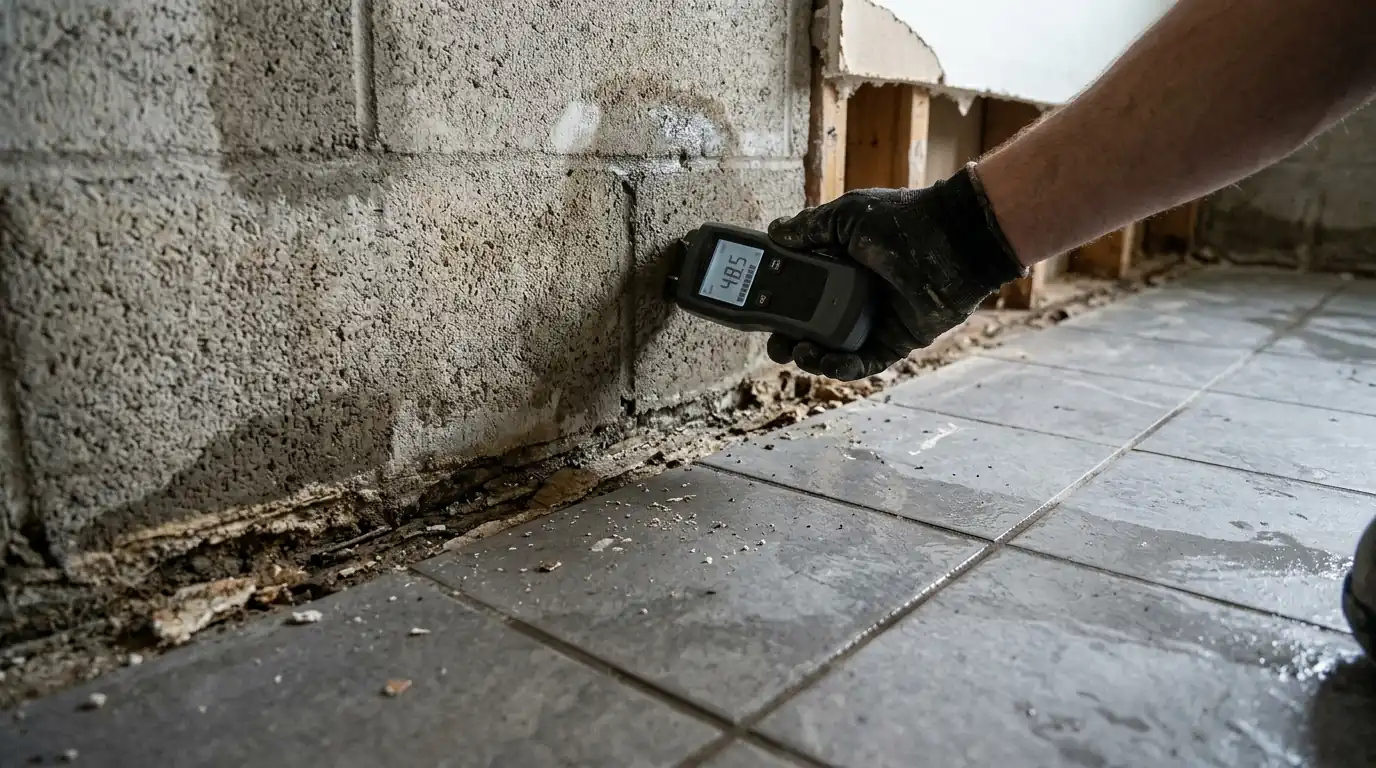
The difference is not just about paperwork. Restoration crews classify water by contamination under the IICRC S500 approach. A clean supply line break is Category 1. Rising floodwater from outside is treated as Category 3, black water, because it carries soil, sewage and whatever else it picked up on the way in.
That changes the work. Clean-water losses can often be dried in place with structural drying. After outside floodwater, porous materials it touched, like drywall, insulation, carpet and pad, generally come out, and the remaining structure is cleaned and disinfected before drying. That is the work described on our flood damage cleanup page, and it is why crews make flood cuts in the drywall.
What to record so the source is clear
Whatever the cause, the adjuster's first question will be where the water came from. Help them answer it with evidence. Photograph the source: the burst fitting, the cracked tank, the clogged drain or the water line on the outside of the house and the debris on the lawn. Note the time and the weather.
If water came from more than one direction, such as a roof leak and street flooding in the same storm, say so and photograph both. Moisture mapping and photos taken by a crew can show which rooms were wet from above and which from the floor up. Keep the readings and photos together with your claim notes, and follow the steps in our first 24 hours checklist.
Questions to ask your agent this week
The best time to learn how your coverage works is before you need it. Bring your declarations page and ask plain questions. Do I have flood coverage, and through which policy? What is my deductible for flood, for hurricane and for other water losses? Do I have sewer backup coverage? Are there limits on mold cleanup that follows a covered loss?
Write the answers on the policy itself and keep it with your storm documents. If you live in a ground-floor unit or near the water, ask how the association's master policy and your own policy fit together for water that comes in from outside.
It also helps to know roughly what a water job costs before you decide on a deductible. A deductible that looked sensible when you bought the policy can be larger than the bill for a small leak, or a small fraction of a flood that soaks every room on the ground floor. Our restoration costs page lists typical Miami ranges for drying, flood cleanup and rebuild work, which gives you something concrete to weigh against the deductible options your agent describes.
Common questions
Is wind-driven rain the same as flood?
Generally not. Rain that enters through an opening the wind created, such as a damaged roof or a broken window, is usually considered a different kind of loss from water rising across the ground. How your policy treats it depends on its wording and your hurricane deductible, so ask your agent to walk you through both.
I rent. Does any of this apply to me?
Yes. Your landlord's policy usually addresses the building, not your belongings. A renters policy may cover some water damage to your things, but FEMA notes most renters policies do not cover flood. Renters can buy flood coverage for contents.
Can I buy flood insurance if I am in zone X?
Yes. Coverage is recommended in zone X even though federally backed lenders do not require it there. Policies in lower-risk zones are often less expensive, and remember the typical 30-day waiting period before coverage starts.